How to Choose a Prostate Supplement: Ingredients, Evidence, and Red Flags
There is no single best prostate supplement, but some ingredients have better evidence than others. Here is how to compare them, which foods and habits matter, and the red flags to avoid.
Reader-supported: if you buy through links on this page, we may earn a commission at no extra cost to you. It never changes what we write. How we research.
In this article
- What happens to the prostate as men age
- Start with the steps that have the best evidence
- Foods good for the prostate: what the research suggests
- Common prostate supplement ingredients, rated by evidence
- How to read a prostate supplement label
- Red flags to watch for
- Symptoms that need a doctor, not a supplement
- Where P-Protect fits
- Frequently asked questions
- The takeaway
Search for the best prostate supplement and you'll find dozens of products promising an easier stream and fewer trips to the bathroom at night. Most of them draw from the same short list of plant extracts and nutrients. A few of those ingredients have encouraging early evidence. The most famous one, saw palmetto, has largely failed in large, well-designed trials.
This guide explains what happens to the prostate as men age, the lifestyle steps and foods with the best support, how the common ingredients compare, and the red flags that should make you put a bottle back on the shelf. It's general information, not medical advice; see our medical disclaimer.
Key takeaways
- No supplement has strong evidence for prostate-related urinary symptoms. Lifestyle steps and medical care come first.
- Saw palmetto, the best-known ingredient, did no better than placebo in two large NIH-funded trials and a 2023 Cochrane review.
- Beta-sitosterol, pygeum, pumpkin seed and stinging nettle show some benefit, but mostly in small or short studies.
- A good product lists every ingredient with its amount. Red flags include hidden formulas, "FDA approved" claims and high-dose vitamin E.
- Blood in the urine, pain, fever or trouble urinating need a doctor, not a supplement.
What happens to the prostate as men age
The prostate is a small gland that sits just below the bladder and wraps around the urethra, the tube that carries urine out of the body. According to the NIDDK, it goes through a growth spurt in puberty and then a second, slow growth phase that starts around age 25 and continues for the rest of your life.
When that growth goes further than normal, it's called benign prostatic hyperplasia, or BPH. "Benign" means it isn't cancer. The NIDDK estimates that BPH affects 5% to 6% of men ages 40 to 64 and 29% to 33% of men 65 and older. The odds are higher with age, a family history of BPH, heart and blood vessel disease, type 2 diabetes, obesity and low physical activity.
An enlarged prostate can press on the urethra. The bladder has to work harder, and it may not empty all the way. That's what causes the familiar symptoms:
- a slow or weak stream, or trouble getting started
- dribbling at the end
- feeling that you didn't fully empty
- urgency and going often
- waking up at night to urinate
Why nighttime urination gets so much attention
Waking up to urinate, called nocturia, is often the symptom that sends men looking for help, because it wrecks sleep. But BPH is only one possible cause. Evening drinks, water pills, diabetes, heart and kidney problems and sleep apnea can all do it too. Our guide to frequent urination at night shows how to tell the causes apart with a simple bladder diary.
Start with the steps that have the best evidence
Before any supplement, these are the changes the NIDDK recommends for men with mild BPH symptoms:
- Drink less before bed and before going out. You still need fluids, so drink them earlier in the day.
- Limit alcohol and caffeine, which increase how often you need to go.
- Be physically active. A meta-analysis of 11 studies with more than 43,000 men found that moderate or vigorous activity was linked to roughly a quarter lower odds of BPH or urinary symptoms, compared with a sedentary lifestyle (Parsons and Kashefi, 2008).
- Empty your bladder completely when you go, and don't hold urine for long periods.
- Watch medicines that can make symptoms worse, such as over-the-counter decongestants and antihistamines, some antidepressants, tranquilizers and diuretics.
Weight matters too. The NIDDK lists obesity among the conditions linked to a higher chance of BPH, along with type 2 diabetes and heart disease. Losing extra weight and keeping blood sugar in range won't change your prostate overnight, but they address several risk factors at once.
Foods good for the prostate: what the research suggests
The NIDDK says researchers haven't found that any eating pattern causes BPH or protects against it, although some changes, like the timing of fluids, can ease symptoms. That said, long-term studies point in a consistent direction.
In a study that followed 4,770 men for seven years, those who ate four or more servings of vegetables a day had about a 32% lower risk of developing symptomatic BPH than men who ate less than one. Men who ate red meat daily had a 38% higher risk, and the highest fat intake was linked to a 31% higher risk (Kristal and colleagues, 2008). Observational studies like this can't prove cause and effect, but the pattern matches standard heart-healthy eating advice.
| Food | Why it's on the list | Strength of evidence |
|---|---|---|
| Vegetables, 4 or more servings a day | Linked to lower BPH risk in a large long-term study | Observational |
| Pumpkin seeds | Whole seeds (5 g twice a day) beat placebo in a one-year trial | One large trial |
| Tomatoes and tomato products | The main food source of lycopene, studied in a small BPH pilot | Very limited |
| Protein foods other than daily red meat | Daily red meat was linked to higher BPH risk | Observational |
| Water and other drinks, earlier in the day | Spacing fluids out reduces nighttime trips | Expert advice (NIDDK) |
Common prostate supplement ingredients, rated by evidence
Here is how the most common ingredients stack up. The rating reflects how strong and consistent the human research is for urinary symptoms linked to BPH, not marketing claims. All of these studies used products taken by mouth.
| Ingredient | What the research shows | Evidence |
|---|---|---|
| Saw palmetto | Two NIH-funded trials (225 and 369 men) found no benefit over placebo, even at three times the usual dose. A 2023 Cochrane review of 27 studies found little to no difference | Weak |
| Beta-sitosterol | A Cochrane review of 4 trials (519 men, 4 to 26 weeks) found better symptom scores and urine flow, but no change in prostate size | Limited, short-term |
| Pygeum (African plum) | A Cochrane review of 18 small trials (1,562 men, about 2 months on average) found men were twice as likely to report improvement, with 19% less nighttime urination | Limited, short-term |
| Pumpkin seed | In a one-year trial of 1,431 men, whole seeds beat placebo (58.5% vs 47.3% responders); extract capsules did not | Limited |
| Stinging nettle | One 6-month trial of 620 men reported better symptom scores and urine flow; the author called for confirmation | Limited, single trial |
| Lycopene | A 40-man pilot (15 mg a day for 6 months) found lower PSA and no prostate growth compared with placebo | Very limited |
| Zinc | Only weak links in observational data; no good trials for urinary symptoms | Not supported |
| Vitamin E and selenium | Tested for prostate cancer risk in a large trial; vitamin E raised it | Avoid high doses |
Saw palmetto: popular, but the big trials were disappointing
Saw palmetto is the best-selling prostate herb, and older, smaller studies made it look promising. Then came better-designed trials. In the STEP trial, 225 men with moderate to severe symptoms took 160 mg twice a day or a placebo for a year, and there was no difference in symptoms, urine flow or prostate size. In the CAMUS trial, 369 men took up to three times the standard 320 mg daily dose over 72 weeks, and saw palmetto beat placebo on no measure at all.
A 2023 Cochrane review pooled 27 studies with 4,656 men and concluded that saw palmetto alone provides little to no benefit for urinary symptoms. The NCCIH now says it is "probably not helpful" for this purpose. On the plus side, it's well tolerated in studies and doesn't appear to affect PSA readings. There's more uncertainty about formulas that combine it with other herbs.
Beta-sitosterol and pygeum: better signals, smaller studies
Both have more encouraging results, but the trials were short and small, and many date back decades. In pooled data, beta-sitosterol improved symptom scores by about 5 points on the 35-point International Prostate Symptom Score (IPSS), and it didn't change prostate size. Pygeum's trials lasted about two months on average, and many didn't report results in a way that could be pooled. Long-term safety and benefit for both are unknown.
Pumpkin seed and stinging nettle
Pumpkin seed is interesting because the positive result came from plain seeds, about 5 g twice a day, not a pricey extract. The extract capsules in the same trial did no better than placebo, and the researchers said the finding still needs to be confirmed. Stinging nettle looked strong in one large trial (Safarinejad, 2005), but a single study isn't enough until other teams repeat it.
Vitamin E, selenium and zinc: more isn't better
The SELECT trial gave more than 35,000 men vitamin E (400 IU a day), selenium, both or a placebo. Vitamin E didn't lower prostate cancer risk; taken alone, it raised it by 17%. Selenium showed no benefit.
Zinc is common in men's formulas. MedlinePlus notes that long-term excess zinc can lead to copper, iron or magnesium deficiency (MedlinePlus). Unless your doctor finds a deficiency, there's little reason to take high doses for your prostate.
How to read a prostate supplement label
A good label lets you check the formula against the studies above. Look for:
- Every ingredient with its amount. FDA rules require dietary supplements to carry a Supplement Facts panel that lists each dietary ingredient. Ingredients inside a "proprietary blend" don't need individual amounts, so you can't tell how much of each herb you're getting (FDA).
- Doses that match the research. The saw palmetto trials used 320 mg a day as the standard dose, the pumpkin seed trial used 10 g of seeds a day, and the lycopene pilot used 15 mg a day (Schwarz and colleagues, 2008). A tiny amount of ten herbs in one capsule usually means too little of each.
- Clear plant names. "Saw palmetto berry extract" tells you more than "proprietary men's herbal complex."
- Independent testing. A seal from an independent testing program, such as USP or NSF, indicates the product was checked against its label and for contaminants.
- A real company behind it. FDA rules require a US address or phone number on the label for reporting serious side effects.
- The format. The FDA defines dietary supplements as products you swallow. Patches and creams fall outside that definition and don't come with the same Supplement Facts panel, so ask the seller for the full ingredient list before you buy.
Red flags to watch for
- Promises to make the prostate smaller, end BPH or replace your medicine. Under FDA rules, a product sold with disease claims is regulated as a drug, not a supplement.
- "FDA approved" on a supplement. The FDA does not approve dietary supplements before they're sold.
- Hidden or vague formulas, such as no ingredient list or blends with no amounts.
- Miracle stories. "Doctors don't want you to know," a famous name with no source, or one ingredient said to fix everything.
- Mega-doses of vitamin E or selenium. See the SELECT trial above.
- Pressure tactics and hidden subscriptions. Countdown timers, "only 3 left" warnings and auto-ship plans buried in the fine print.
- No refund policy or contact details.
Symptoms that need a doctor, not a supplement
Safety first
Don't try to manage these symptoms with supplements. See a doctor right away if you can't urinate at all, have painful, frequent and urgent urination with fever and chills, see blood in your urine, or have strong pain in your lower belly or urinary tract.
Book an appointment if urinary symptoms are new, getting worse or disturbing your sleep. BPH symptoms can overlap with prostatitis, bladder problems, infections and prostate cancer, and only an exam and tests can tell them apart.
About PSA and prostate cancer screening: PSA is a blood test. Levels can rise with prostate cancer, but also with BPH and prostatitis. The U.S. Preventive Services Task Force's current recommendation (2018, with an update in progress) says men ages 55 to 69 should make an individual decision about PSA screening after discussing the benefits and harms with their clinician. Tell your doctor about every supplement you take before the test.
Where P-Protect fits
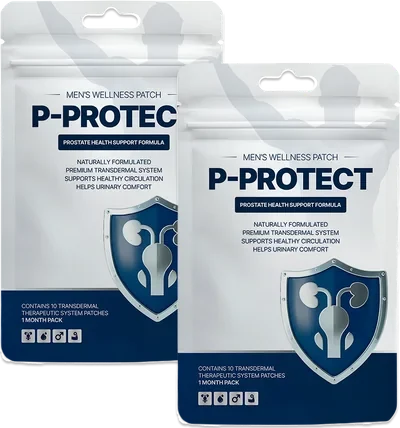
P-Protect is a different kind of product from the capsules in the table above. It's a transdermal skin patch sold as a "Prostate Health Support Formula," and its pouch says it "helps urinary comfort" and "supports healthy circulation." At the time of writing, the seller doesn't publish its ingredient list, so we can't rate it against the ingredients above, and we found no clinical studies on the product itself.
That makes it a fit for a fairly specific reader: a man who has already had his symptoms checked, would rather not add another pill, is willing to ask the seller for the formula, and wants the safety net of a 60-day money-back guarantee. If you want to compare doses against published research, a fully labeled capsule is the better match. Our P-Protect review covers prices, the refund terms and what the research says about skin delivery.
Frequently asked questions
What is the best prostate supplement?
There isn't one clear winner. Beta-sitosterol, pygeum and pumpkin seed have the most encouraging results, mostly from small or short studies, while saw palmetto has failed in large trials. The best choice is a fully labeled product used alongside lifestyle changes, after a doctor has checked your symptoms.
Does saw palmetto work for the prostate?
Large, well-designed trials and a 2023 Cochrane review found that saw palmetto alone works about as well as a placebo for urinary symptoms. It's generally well tolerated, but the evidence doesn't support relying on it.
What foods are good for the prostate?
Long-term studies link plenty of vegetables, less red meat and less fat with a lower risk of BPH. Pumpkin seeds have one positive trial, and tomatoes are the main food source of lycopene. Drinking most of your fluids earlier in the day also helps with nighttime trips.
How long does a prostate supplement take to work?
Most trials ran from about two months to a year. If you try one, give it a set period, track your symptoms with a bladder diary, and stop if nothing changes.
Can I take a prostate supplement with tamsulosin or finasteride?
Ask your doctor or pharmacist first. The NCCIH warns that some herbs and medicines interact in harmful ways, and doubling up on products aimed at the same symptoms makes it hard to tell what's working.
Do prostate supplements affect PSA tests?
Some may. Saw palmetto doesn't appear to change PSA readings, but a small lycopene study found lower PSA levels. Tell your doctor about every supplement you take before a PSA test.
The takeaway
The best prostate supplement, for most men, starts with habits: fluids earlier in the day, less evening caffeine and alcohol, regular activity, plenty of vegetables and a healthy weight. If you add a supplement, choose a fully labeled one with doses that match the research, skip mega-doses of vitamin E, and tell your doctor. For more, browse our prostate health guides.
References
- National Institute of Diabetes and Digestive and Kidney Diseases. Enlarged Prostate (Benign Prostatic Hyperplasia). NIH, 2024. link
- National Center for Complementary and Integrative Health. Saw Palmetto: Usefulness and Safety. NIH, 2025. link
- Bent S, Kane C, Shinohara K, et al. Saw palmetto for benign prostatic hyperplasia. New England Journal of Medicine, 2006. link
- Barry MJ, Meleth S, Lee JY, et al. Effect of increasing doses of saw palmetto extract on lower urinary tract symptoms: a randomized trial. JAMA, 2011. link
- Franco JV, Trivisonno L, Sgarbossa NJ, et al. Serenoa repens for the treatment of lower urinary tract symptoms due to benign prostatic enlargement. Cochrane Database of Systematic Reviews, 2023. link
- Wilt T, Ishani A, MacDonald R, et al. Beta-sitosterols for benign prostatic hyperplasia. Cochrane Database of Systematic Reviews, 2000. link
- Wilt T, Ishani A, Mac Donald R, et al. Pygeum africanum for benign prostatic hyperplasia. Cochrane Database of Systematic Reviews, 2002. link
- Vahlensieck W, Theurer C, Pfitzer E, et al. Effects of pumpkin seed in men with lower urinary tract symptoms due to benign prostatic hyperplasia in the one-year, randomized, placebo-controlled GRANU study. Urologia Internationalis, 2015. link
- Klein EA, Thompson IM Jr, Tangen CM, et al. Vitamin E and the risk of prostate cancer: the Selenium and Vitamin E Cancer Prevention Trial (SELECT). JAMA, 2011. link
- U.S. Preventive Services Task Force. Prostate Cancer: Screening. USPSTF, 2018. link