Orivelle Review (2026): What's in the Anti-Fungal Nail Pen, Price and What to Expect
A careful look at the Orivelle Anti-Fungal Pen, a tea tree oil nail pen marketed for nail fungus: what the box lists, what research says about its main ingredient, what it costs and why the return policy deserves a close read.
Reader-supported: if you buy through links on this page, we may earn a commission at no extra cost to you. It never changes what we write. How we research.
Orivelle
Tea tree oil nail pen with 17 plant-based ingredients, marketed for nail fungus and healthier-looking nails
- Format
- Anti-fungal nail pen (3 mL, brush tip)
- Price
- $9.99–$19.99 per pen
- Guarantee
- 30-day returns from delivery (unopened pens only, per written policy)
- Sold at
- Official website only
In this article
- What Is Orivelle?
- Nail Fungus in Brief: Why It's Hard to Clear
- Orivelle Ingredients: What the Box Lists
- What Research Says About Tea Tree Oil and Nail Fungus
- Does Orivelle Work?
- How to Use Orivelle
- Orivelle Price, Bonuses and Subscription
- Orivelle Return Policy: Read the Fine Print
- Possible Reactions and Who Should See a Doctor First
- Orivelle Pros and Cons
- Orivelle vs. Prescription Options
- Where to Buy Orivelle
- Orivelle FAQ
- Bottom Line
Key takeaways
- Orivelle is a 3 mL twist-up pen with a brush tip, meant to be brushed onto the nail and the skin around it twice a day. It isn't an FDA-approved antifungal medicine.
- The box lists 17 ingredients: vitamin C, tea tree oil, peppermint and a long list of plant oils and butters. It doesn't list how much tea tree oil is in it.
- Tea tree oil has a few small studies in toenail fungus, but the National Center for Complementary and Integrative Health (NCCIH) says the research is too thin to draw conclusions. We found no published trial of Orivelle itself.
- At the time of writing, the official checkout charges $19.99 for one pen plus $4.95 shipping, or $9.99 to $13.99 per pen in packs of 3 or 6.
- The sales page promises a "100% refund within 30 days," but the written policy only accepts unopened, unused pens. Read it before you order.
Orivelle is a nail pen sold online for people dealing with thick, yellow or brittle toenails, and most Orivelle reviews you'll find are written to sell it. For this one, we read the official product page, the checkout, the terms and the shipping, returns and refund policy, and we compared the ingredients on the box with published research on nail fungus. We didn't test the pen, and there are no customer stories here. Our editorial policy explains how we work.
What Is Orivelle?
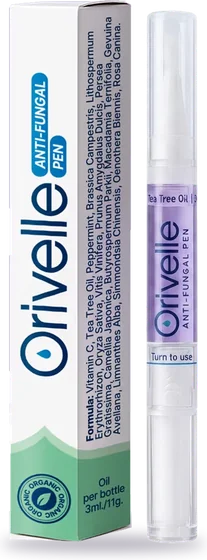
Orivelle, sold as the "Orivelle Anti-Fungal Pen," is a slim plastic pen filled with an oil-based liquid. You twist the bottom to push the liquid into a small brush, then paint it onto the nail. The box shows "Oil per bottle 3ml./11g." and prints the formula on its side.
The official site describes it as "a natural way to eliminate nail fungus" and says its formula "reaches even the deepest layers of the affected nail." It also says the pen was developed by Alan Meyers, described as a "Holistic Skin & Nail Health Expert," and makes number claims such as an "84% success rate," "83% more effective than other anti-fungal treatments" and "over 200,000 verified users." Those figures carry an asterisk, and the site doesn't explain how they were measured. The FAQ notes that its results timeline is "based on self-reported customer feedback."
The fine print at the bottom of the page tells a more careful story. It says Orivelle "is not intended to diagnose" or treat any medical condition, advises talking to a healthcare provider "especially if you have any existing skin or nail conditions," and states that "any individuals shown in photos are models and not actual users unless otherwise stated."
According to the terms of sale, the seller is ASTRONARA TRADING FZCO, a company registered in Dubai, United Arab Emirates. Support is handled by email at support@tryorivelle.com.
Nail Fungus in Brief: Why It's Hard to Clear
Nail fungus (onychomycosis) is a fungal infection in and around the nail. MedlinePlus lists the typical signs: brittleness, a change in shape, crumbling edges, debris under the nail, lifting of the nail, loss of shine, thickening and white or yellow streaks. It's more common in toenails, and the risk is higher with diabetes, poor circulation, nerve problems in the feet, minor nail injuries and immune system problems.
Two facts matter for any product, Orivelle included:
- Nails grow slowly. MedlinePlus says that even when a treatment works, "it may take up to a year for a new clear nail to grow." A damaged nail doesn't turn clear; it has to grow out.
- Other conditions look the same. The American Academy of Dermatology (AAD) notes that nail psoriasis or a nail injury can look like nail fungus. That's why dermatologists often take a small sample of the nail to confirm it before choosing a treatment.
MedlinePlus also says that over-the-counter creams and ointments "usually do not help" with this condition, and that the fungus may come back even when treatment works. Prescription topical solutions approved for toenail fungus are usually applied once a day for about 48 weeks, according to the AAD. That's the benchmark to keep in mind when a pen promises visible changes in days.
Orivelle Ingredients: What the Box Lists
The side of the box lists 17 ingredients by their botanical names. The site gives plain names and a short role for each. No concentrations are listed for any of them.
| Ingredient on the box | Common name | Role in the formula | Research in nail fungus |
|---|---|---|---|
| Tea Tree Oil (Melaleuca) | Tea tree oil | The main antifungal botanical | A few small trials |
| Vitamin C | Vitamin C | Antioxidant; supports collagen in skin | None for nail fungus |
| Peppermint | Peppermint | Cooling, scent | None for nail fungus |
| Lithospermum Erythrorhizon | Purple gromwell root | Traditional root extract | No human studies found |
| Brassica Campestris | Rapeseed oil | Moisturizing oil | Not studied for this |
| Oryza Sativa | Rice bran | Moisturizing | Not studied for this |
| Vitis Vinifera | Grape seed oil | Moisturizing oil | Not studied for this |
| Prunus Amygdalus Dulcis | Sweet almond oil | Moisturizing oil | Not studied for this |
| Persea Gratissima | Avocado oil | Moisturizing oil | Not studied for this |
| Camellia Japonica | Camellia oil | Moisturizing oil | Not studied for this |
| Butyrospermum Parkii | Shea butter | Moisturizing butter | Not studied for this |
| Macadamia Ternifolia | Macadamia oil | Moisturizing oil | Not studied for this |
| Gevuina Avellana | Chilean hazelnut oil | Moisturizing oil | Not studied for this |
| Limnanthes Alba | Meadowfoam oil | Moisturizing oil | Not studied for this |
| Simmondsia Chinensis | Jojoba oil | Moisturizing oil | Not studied for this |
| Oenothera Biennis | Evening primrose oil | Moisturizing oil | Not studied for this |
| Rosa Canina | Rosehip oil | Moisturizing oil | Not studied for this |
What the List Tells You
- Tea tree oil is the only ingredient with direct nail fungus research. Everything else is there to moisturize, soften or add scent. Oils can make a dry, cracked cuticle feel better, but they aren't antifungals.
- The tea tree oil strength is unknown. That matters, because the studies below used either 100% tea tree oil or a cream with 5% tea tree oil combined with a prescription-strength antifungal drug. Without a percentage, you can't compare Orivelle with either one.
- It isn't an approved antifungal drug. The prescription solutions dermatologists use have FDA approval for toenail fungus. Orivelle doesn't, and its own disclaimer says it isn't intended for any medical condition.
Good to know
The box also shows an "Organic" seal. The site doesn't name a certifying body, so we couldn't confirm what that seal refers to.
What Research Says About Tea Tree Oil and Nail Fungus
The 1994 Trial: 100% Tea Tree Oil vs. Clotrimazole
The best-known study is a randomized, double-blind trial of 117 people with culture-confirmed toenail fungus. Half applied 100% tea tree oil twice a day for six months, and half applied 1% clotrimazole, an over-the-counter antifungal. The two groups did about the same:
- Fungus-free cultures after six months: 18% with tea tree oil and 11% with clotrimazole
- Partial or full improvement on clinical exam: 60% with tea tree oil and 61% with clotrimazole
- Three months after stopping, about half of each group reported continued improvement
The nails were also debrided (filed and trimmed down) during the study, which helps any topical product reach the infection. The authors concluded that topical treatment can improve nail appearance and symptoms, but that "all current therapies have high recurrence rates."
The 1999 Trial: Tea Tree Oil Plus Butenafine
A second trial with 60 people tested a cream that combined 5% tea tree oil with 2% butenafine, a synthetic antifungal drug. After 16 weeks, 80% of the people using the cream were judged clear, compared with none in the placebo group. Four people in the active group had mild inflammation. Because the cream contained a drug, this study doesn't show what tea tree oil does on its own.
The Bottom Line from NCCIH
NCCIH, part of the National Institutes of Health, sums up the evidence this way: "Only a few studies have been done on tea tree oil for fungal nail infections. Both the amount and the quality of the research are insufficient to allow any conclusions to be reached." It adds that most people can use topical tea tree oil without problems, but some develop redness or irritation, especially with old oil or oil exposed to heat, light or air. Tea tree oil should never be swallowed.
We found no human studies of Lithospermum (purple gromwell) root for nail fungus.
Does Orivelle Work?
We found no published trial of Orivelle as a finished product, so no one can give a firm answer. Here's what the evidence supports:
- Tea tree oil has some signal, mostly from one small 1994 trial that used it at full strength for six months, alongside regular nail filing.
- Orivelle's dose is unknown. It may contain much less tea tree oil than the 100% oil in that trial.
- The timeline claims don't match how nails grow. The site mentions "first visible results within 5-7 days," while the checkout says "it takes at least 5 months to fully get rid of toenail fungus." MedlinePlus says a new clear nail can take up to a year.
A fair expectation is a pleasant, easy-to-use oil that may soften the nail and the skin around it and may help a mild case look better over many months. For a confirmed infection, especially a thick nail, several nails or a long-standing problem, a dermatologist or podiatrist has prescription options with stronger evidence.
How to Use Orivelle
The official directions have three steps:
- Clean and dry. Wash the affected area and dry it completely.
- Apply. Twist the bottom of the pen to release the formula, then brush a thin layer onto the nail and the surrounding skin.
- Let it absorb. No rinsing needed. The company recommends using it twice a day, morning and night.
The FAQ also says to skip nail polish and acrylic nails while using it. Two practical points from dermatology care apply here too: keeping the nail trimmed and filed down helps any topical product reach the infection, and using a pen on more than one person can spread fungus, so keep it to yourself. The disclaimer says the pen is for external use only and shouldn't be used on broken skin.
Orivelle Price, Bonuses and Subscription
We couldn't open the checkout through our own link from our location, so these prices come from the official U.S. checkout, reached from the product page, at the time of writing:
| Package | Total | Per pen | Shipping (U.S.) |
|---|---|---|---|
| 1 pen | $19.99 | $19.99 | $4.95 |
| 3 pens ("2 + 1") | $41.97 | $13.99 | Included |
| 6 pens ("3 + 3") | $59.94 | $9.99 | Included |
A few things to know before you order:
- A "Detox Tea" is added to every order at no charge. The checkout doesn't describe what's in it. If you have a health condition or take medicines, check its label before drinking it.
- There's a subscribe-and-save option that ships every three months and renews until you cancel. If you only want a one-time order, check that the subscription box isn't selected.
- How many pens you'll need is unclear. The checkout says one pen "typically lasts about 2 months" and pushes bundles for longer use. With twice-daily use on several nails, a 3 mL pen may run out sooner.
Prices change often, so check the official site for current pricing.
Orivelle Return Policy: Read the Fine Print
This is the part most worth slowing down for. The product page says, "If you're unhappy with Orivelle, you're eligible for a 100% refund within 30 days." The written Shipping, Returns & Refund Policy is narrower. Its voluntary 30-day window covers products that are "unopened, unused, in its original sealed packaging," counted from delivery. Under that policy:
- You pay the return shipping, and the original shipping charge isn't refunded in most countries.
- You must register the return by form or email before sending anything back.
- For subscriptions, only the first order can be returned.
- Opened or used pens aren't eligible.
Customers in the EU and the UK also have a 14-day right of withdrawal by law, but the policy says opened hygiene products can't be returned under it. In practice, if you open the pen and it doesn't help, a refund isn't guaranteed. If you're unsure, contact support before you buy and keep a copy of the reply.
Possible Reactions and Who Should See a Doctor First
Topical tea tree oil can cause redness, itching or irritation in some people, and peppermint oil can sting on cracked skin. Stop using the pen if the skin around the nail becomes red, swollen or painful. The company says not to use it on broken skin.
It may suit adults with a mild, already-diagnosed case on one or two nails who want an easy cosmetic oil, understand the limited evidence and are ready to keep using it for months.
See a dermatologist or podiatrist first if you:
- Have diabetes, poor circulation or numbness in your feet. The CDC advises people with diabetes to check their feet every day and to see a doctor about foot problems early.
- Have a weakened immune system
- Have a nail that is painful, lifting off, bleeding or draining pus, or redness spreading into the skin
- Have several nails affected, or the problem keeps coming back
- Aren't sure it's fungus at all, since psoriasis and injuries can look the same
- Are pregnant or breastfeeding, or want to use it on a child
Safety first
Orivelle isn't a medicine approved for nail fungus. If you have diabetes or circulation problems, a foot infection can become serious, so don't rely on a nail pen alone. Ask a dermatologist or podiatrist to confirm the diagnosis and discuss prescription options.
Orivelle Pros and Cons
Pros
- Easy, mess-free pen format with a brush tip
- Full ingredient list printed on the box
- Tea tree oil, its main ingredient, has some research in nail fungus
- Low price per pen in the larger packs
Cons
- No percentage for tea tree oil or any other ingredient
- No published trial of the product itself
- Timeline and success-rate claims aren't backed by a stated method
- Written return policy covers only unopened, unused pens
- Seller is based in Dubai; returns go through a request process
Orivelle vs. Prescription Options
| Orivelle | Prescription topical solutions | Prescription pills | |
|---|---|---|---|
| What it is | Botanical oil pen | FDA-approved antifungal liquids | FDA-approved antifungal tablets |
| Typical use | Twice daily, open-ended | Once daily for about 48 weeks | About 2 to 3 months for toenails |
| Evidence | Indirect (tea tree oil studies) | Clinical trials | Clinical trials |
| Needs a doctor | No | Yes | Yes, with lab monitoring |
| Cost | $9.99 to $19.99 per pen | Varies with insurance | Varies with insurance |
MedlinePlus notes that prescription pills clear the fungus in about half of the people who try them, and that it can still come back. No option is quick or certain, which is why a confirmed diagnosis matters before you spend months on any of them.
Where to Buy Orivelle
At the time of writing, Orivelle is sold through its official website. The company's terms say purchases from unauthorized sellers, including third-party marketplaces, fall outside its return policy, and it can't vouch for those products. If you decide to try it, order from the official site so the returns process applies.
Orivelle FAQ
Is Orivelle legit?
It's a real product sold through its official website by ASTRONARA TRADING FZCO, a company registered in Dubai, with published terms, a shipping and returns policy, order tracking and a support email. Legitimate isn't the same as proven, though: there's no published trial of the pen, and the bold claims on the sales page come without a stated method.
Does Orivelle really work for toenail fungus?
There's no published study of Orivelle itself. Its main ingredient, tea tree oil, matched an over-the-counter antifungal in one 1994 trial when used at full strength twice a day for six months, but NCCIH says the evidence is too limited for conclusions. Orivelle doesn't state how much tea tree oil it contains.
What are the ingredients in Orivelle?
The box lists vitamin C, tea tree oil, peppermint, rapeseed oil, Lithospermum (purple gromwell) root, rice bran, grape seed oil, sweet almond oil, avocado oil, camellia oil, shea butter, macadamia oil, Chilean hazelnut oil, meadowfoam oil, jojoba oil, evening primrose oil and rosehip oil. No amounts are listed.
How long does Orivelle take to work?
The company mentions visible changes in days to two weeks, based on self-reported feedback, but its checkout also says it takes at least five months. Nails grow slowly, and MedlinePlus says a new clear nail can take up to a year even when treatment works.
How do you use the Orivelle pen?
Wash and dry the nail, twist the pen to release the liquid, brush a thin layer onto the nail and the skin around it, and let it absorb. The company recommends twice a day and says to avoid nail polish and acrylics while using it.
Can I get a refund if Orivelle doesn't work?
Possibly not. The sales page mentions a 100% refund within 30 days, but the written policy accepts only unopened, unused pens in their sealed packaging within 30 days of delivery, and you pay return shipping. Ask support to confirm the terms before ordering.
Is Orivelle safe for people with diabetes?
Ask your doctor or podiatrist first. People with diabetes have a higher risk of foot infections becoming serious, and the CDC recommends daily foot checks and early care for any foot problem. A nail pen shouldn't replace that care.
Is Orivelle sold on Amazon or in stores?
The company sells it through its official website, and its terms say purchases from third-party marketplaces aren't covered by its return policy.
Bottom Line
Orivelle is a convenient tea tree oil pen with a clearly printed ingredient list and a low price per pen in the bigger packs. Its weaknesses are the ones that matter most for a stubborn nail problem: no tea tree oil percentage, no study of the product itself, timeline claims that don't fit how slowly nails grow, and a return policy that doesn't cover opened pens.
If you have a mild, confirmed case and want to try a gentle option, it's a reasonable low-cost experiment, as long as you go in expecting months, not days. If the nail is thick, painful or spreading, or if you have diabetes or circulation problems, see a dermatologist or podiatrist first. For more on skin and nail care, browse all Skin & Beauty articles.
References
- MedlinePlus. Fungal nail infection. U.S. National Library of Medicine. link
- American Academy of Dermatology. Nail fungus: Diagnosis and treatment. AAD. link
- National Center for Complementary and Integrative Health. Tea Tree Oil: Usefulness and Safety. NCCIH. link
- Buck DS, Nidorf DM, Addino JG. Comparison of two topical preparations for the treatment of onychomycosis: Melaleuca alternifolia (tea tree) oil and clotrimazole. Journal of Family Practice, 1994. link
- Syed TA, et al. Treatment of toenail onychomycosis with 2% butenafine and 5% Melaleuca alternifolia (tea tree) oil in cream. Tropical Medicine & International Health, 1999. link
- Centers for Disease Control and Prevention. Your Feet and Diabetes. CDC. link