15 Foods Good for Your Eyes (and What They Can and Can't Do for Eyesight)
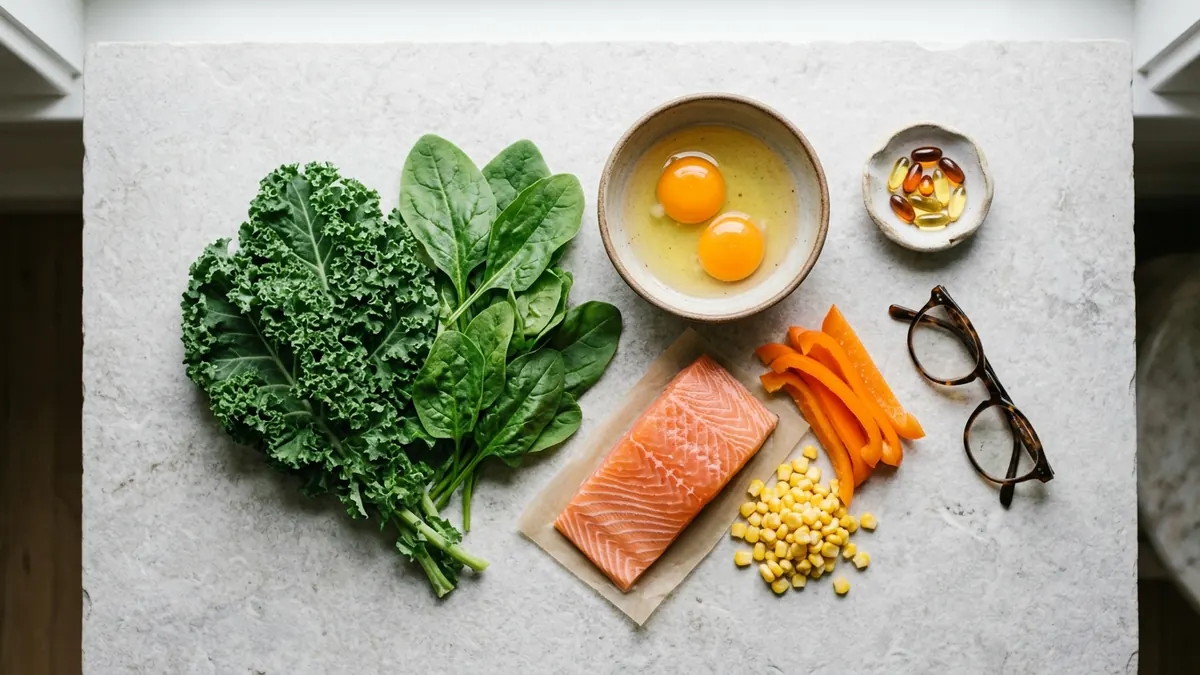
Leafy greens, eggs, oily fish, citrus and beans supply the nutrients your eyes rely on. Here are 15 foods worth eating, plus an honest look at what diet can and can't do for your eyesight.
Reader-supported: if you buy through links on this page, we may earn a commission at no extra cost to you. It never changes what we write. How we research.
In this article
Key takeaways
- Leafy greens, eggs, oily fish, citrus, nuts, beans and orange vegetables supply the nutrients your eyes use most: lutein, zeaxanthin, omega-3s, vitamins A, C and E, and zinc.
- A Mediterranean-style eating pattern is linked to slower progression of age-related macular degeneration (AMD) in long-term studies.
- Food can't correct nearsightedness, farsightedness, astigmatism or presbyopia. Glasses, contact lenses or surgery do that.
- The habits that matter as much as diet: don't smoke, wear UV-blocking sunglasses, rest your eyes during screen time and get dilated eye exams.
Your eyes run on the same nutrients as the rest of your body, and a few of them matter more for vision than others. The American Academy of Ophthalmology (AAO) puts it simply: the same diet that helps your heart helps your eyes, partly because the eyes depend on tiny blood vessels for oxygen and nutrients.
This guide covers 15 foods good for your eyes, the nutrients behind them, and an honest answer to a common question: can food actually improve your eyesight?
Can Food Improve Your Eyesight?
It depends on why your vision is blurry.
Refractive errors, such as nearsightedness, farsightedness, astigmatism and presbyopia (the need for reading glasses in middle age), are the most common vision problems. According to the National Eye Institute (NEI), more than 150 million Americans have one. They come from the shape of the eye or changes in the lens, and they're corrected with eyeglasses, contact lenses or surgery. No food changes that.
What diet can do is supply the nutrients your retina and lens rely on, and a healthy eating pattern is linked to a lower risk of age-related eye disease over time. There is one case where food clearly affects how well you see: vitamin A deficiency causes night blindness. That deficiency is rare in the United States, but it shows how much the retina depends on good nutrition.
The Eye Nutrients to Look For
| Nutrient | What it does for the eyes | Top food sources |
|---|---|---|
| Lutein and zeaxanthin | Form the macular pigment, which helps absorb high-energy blue light | Kale, spinach, collards, broccoli, peas, eggs |
| Vitamin A (and beta-carotene) | Helps the retina turn light into signals; helps keep eyes moist | Sweet potatoes, carrots, cantaloupe, apricots |
| Vitamin C | Antioxidant that helps protect cells | Citrus, red peppers, strawberries, broccoli, kiwi |
| Vitamin E | Antioxidant that helps keep cells healthy | Almonds, sunflower seeds, avocado, olive oil |
| Zinc | Helps keep the retina healthy | Oysters, beans, lean red meat, poultry, eggs |
| Omega-3 fatty acids | DHA is a building block of retinal cells | Salmon, sardines, trout, herring, tuna |
15 Foods Good for Your Eyes
1. Kale
Kale is one of the richest food sources of lutein and zeaxanthin, the two carotenoids that collect in the macula, the part of the retina responsible for sharp central vision. Both are fat-soluble, so sauté kale in olive oil or add avocado to a kale salad to help your body absorb them.
2. Spinach
Spinach is another lutein powerhouse. In a small study comparing sources of lutein, the amount absorbed from spinach was similar to the amount absorbed from lutein supplements. Add a handful to eggs, soups or smoothies.
3. Collard greens
Collards, Swiss chard, turnip greens and romaine lettuce all add lutein and zeaxanthin. If you don't love kale, rotating through these greens gets you the same nutrients with more variety.
4. Eggs
Egg yolks contain lutein and zeaxanthin, plus zinc. In a small study of 10 men, lutein from lutein-enriched eggs was absorbed better than lutein from spinach or supplements. Eggs are an easy daily source.
5. Salmon
Salmon is rich in the omega-3 fats DHA and EPA. A meta-analysis of observational studies found that eating fish at least twice a week was linked to a lower risk of both early and late AMD. These studies show an association, not proof of cause, but fish is a good choice for your heart and eyes either way.
6. Sardines
Sardines, herring and trout deliver omega-3s too, and small fish are generally lower in mercury than large predatory fish. If you're pregnant, ask your doctor how much fish is right for you.
7. Sweet potatoes
Sweet potatoes are packed with beta-carotene, which your body turns into vitamin A. According to an ophthalmologist quoted by the AAO, one sweet potato provides more than 200% of the daily vitamin A that doctors recommend.
8. Carrots
Carrots are the classic eye food because of their beta-carotene. They help you meet your vitamin A needs, but if you already get enough vitamin A, eating more carrots won't give you sharper-than-normal vision.
9. Red bell peppers
Red bell peppers are one of the best sources of vitamin C, an antioxidant that helps protect cells from damage. Eat them raw in salads or as a snack, since heat can reduce vitamin C.
10. Oranges and other citrus
Oranges, grapefruit, tangerines and lemons supply vitamin C. In the NEI's AREDS trial, a high-dose combination of antioxidants including vitamin C, plus zinc, lowered the risk of advanced AMD in people who already had intermediate AMD. Food won't match those doses, but citrus is an easy way to cover daily needs.
11. Broccoli
Broccoli does double duty, offering both vitamin C and lutein and zeaxanthin. Steam it lightly and finish with a drizzle of olive oil.
12. Almonds
Almonds are a top source of vitamin E, which works alongside vitamin C as an antioxidant. A small handful makes a simple snack.
13. Sunflower seeds
Sunflower seeds provide vitamin E and some zinc. Sprinkle them on salads or yogurt.
14. Beans and lentils
Beans and lentils supply zinc, which helps keep the retina healthy. As the AAO points out, high zinc intake can lower copper levels, but legumes such as black-eyed peas, kidney beans and lima beans provide both minerals at once.
15. Oysters
Oysters are among the richest food sources of zinc. Lean red meat, poultry and fortified cereals are other good options if you don't eat shellfish.
Honorable mentions: peas, avocados, olive oil, cantaloupe, apricots, strawberries, kiwi, tomatoes, raspberries, papaya and mangoes all add eye-friendly nutrients.
The Pattern Matters More Than Any Single Food
No single "superfood" protects your vision. The strongest evidence points to an overall eating pattern.
In a study that followed 2,525 people from the AREDS trial for up to 13 years, those who most closely followed a Mediterranean-style diet had about a 26% lower risk of progressing to advanced AMD, although the link varied with genetic risk. The Mediterranean diet is built on vegetables, fruits, whole grains, beans, nuts, olive oil and fish, with less red meat and sweets. As with most diet research, this is an association, but it fits with what we know about the nutrients involved, and the same pattern supports heart and brain health.
How to Improve Eyesight Naturally: What Actually Works
Food is only one part of keeping your eyes healthy. These habits, recommended by the NEI, matter just as much:
- Don't smoke. Smoking raises the risk of macular degeneration and cataracts and can harm the optic nerve.
- Wear sunglasses. Choose lenses that block 99% to 100% of UVA and UVB rays, even on cloudy days.
- Follow the 20-20-20 rule. Every 20 minutes of screen time, look at something about 20 feet away for 20 seconds. It eases eye strain, though it doesn't change your prescription.
- Get a dilated eye exam. Many eye diseases have no early warning signs, and an exam is the only way to catch them early.
- Manage your overall health. Diabetes and high blood pressure raise the risk of eye disease, so staying active and following your doctor's plan protects your eyes too.
- Wear protective eyewear for sports, yard work and home repairs.
If your vision has become blurry, the most effective natural step is an eye exam. An updated prescription often makes the biggest difference.
Do You Need an Eye Supplement?
Most people don't. "In general, most Americans can and should get enough nutrients through their diet without needing to take supplements," an ophthalmologist quoted by the AAO explains. The main exception is people with intermediate or advanced AMD, for whom eye doctors may recommend the AREDS2 formula. The NEI notes that diet alone can't reach the high nutrient levels used in that formula.
If you struggle to eat leafy greens and want extra lutein and zeaxanthin, a supplement may be worth discussing with your doctor. Our guide to supplements for eye health explains which nutrients have real evidence. One option we've looked at closely is VisiVra, a once-daily capsule with lutein, zeaxanthin, saffron and everyday doses of vitamins and zinc. Read our VisiVra review for the ingredients, price and guarantee. A supplement adds to a good diet; it doesn't replace one.
Foods for Eyes FAQ
What is the best food for your eyes?
There's no single best food, but dark leafy greens such as kale and spinach come close because they're rich in lutein and zeaxanthin. Pair them with oily fish, eggs, citrus, nuts and beans for the full range of eye nutrients.
Do carrots really improve your eyesight?
Carrots supply beta-carotene, which your body turns into vitamin A, and vitamin A is essential for seeing in low light. If you already get enough, eating more carrots won't sharpen your vision.
How can I improve my eyesight naturally?
If your vision is blurry because of nearsightedness, farsightedness or presbyopia, food and habits won't correct it; glasses, contacts or surgery will. You can protect long-term eye health by eating well, not smoking, wearing sunglasses, resting your eyes during screen time and getting regular eye exams.
Are eggs good for your eyes?
Yes. Egg yolks contain lutein, zeaxanthin and zinc, and a small study found that lutein from lutein-enriched eggs was absorbed well compared with spinach or supplements.
How much fish should I eat for eye health?
Studies linking fish to lower AMD risk generally looked at eating fish at least twice a week. Oily fish such as salmon, sardines and trout give you the most omega-3s.
Can diet help dry eyes?
It's unclear. The AAO notes that fish oil capsules did not improve dry eye symptoms in a large study, and the evidence for omega-3s from food is uncertain. Artificial tears and a visit to your eye doctor are better first steps.
For more, browse our eye health articles. This guide is general information and not a substitute for advice from your doctor; see our medical disclaimer.
References
- American Academy of Ophthalmology. Fabulous Foods to Boost Eye Health. AAO, 2026. link
- American Academy of Ophthalmology. Diet, Nutrition, and Eye Health Supplements. AAO, 2025. link
- National Eye Institute. Keep Your Eyes Healthy. NEI, 2025. link
- National Eye Institute. Refractive Errors. NEI. link
- National Eye Institute. AREDS/AREDS2 Frequently Asked Questions. NEI. link
- Merle BMJ, et al. Adherence to a Mediterranean diet, genetic susceptibility, and progression to advanced macular degeneration: a prospective cohort study. American Journal of Clinical Nutrition, 2015. link
- Chong EW, et al. Dietary omega-3 fatty acid and fish intake in the primary prevention of age-related macular degeneration: a systematic review and meta-analysis. Archives of Ophthalmology, 2008. link
- Chung HY, et al. Lutein bioavailability is higher from lutein-enriched eggs than from supplements and spinach in men. Journal of Nutrition, 2004. link
- MedlinePlus. Vitamin A. U.S. National Library of Medicine. link
- American Academy of Ophthalmology. Can Fish Oil Relieve Dry Eye? AAO, 2024. link