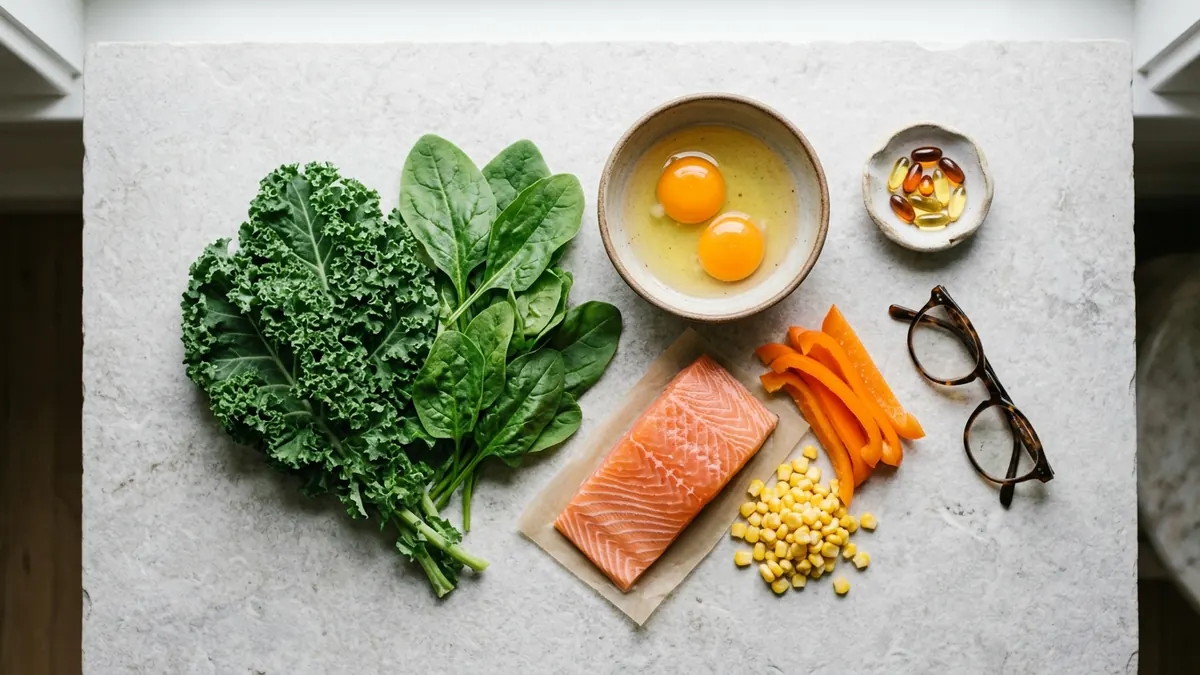
VisiVra Review (2026): Ingredients, Price, and What the Evidence Says
A label-first look at VisiVra, a once-daily eye supplement with lutein, zeaxanthin, saffron and bilberry: what the research supports, what it costs and who should check with a doctor first.
Reader-supported: if you buy through links on this page, we may earn a commission at no extra cost to you. It never changes what we write. How we research.
In this article
Key takeaways
- VisiVra is a once-daily capsule with seven vitamins and minerals plus a 351 mg blend of 14 botanicals and carotenoids, including lutein, zeaxanthin, saffron and bilberry.
- Its vitamin and mineral doses are everyday amounts, far below the AREDS2 formula used for intermediate AMD.
- Lutein, zeaxanthin and saffron have the most research behind them, but the label doesn't disclose their doses.
- At the time of writing, it costs $49 to $79 per bottle depending on the package, with a 60-day money-back guarantee.
VisiVra is marketed as daily nutritional support for clear, comfortable vision. For this review we read the Supplement Facts panel, the official sales and return-policy pages, and the published research on each ingredient. We did not run our own test, and there are no customer stories here.
What Is VisiVra?
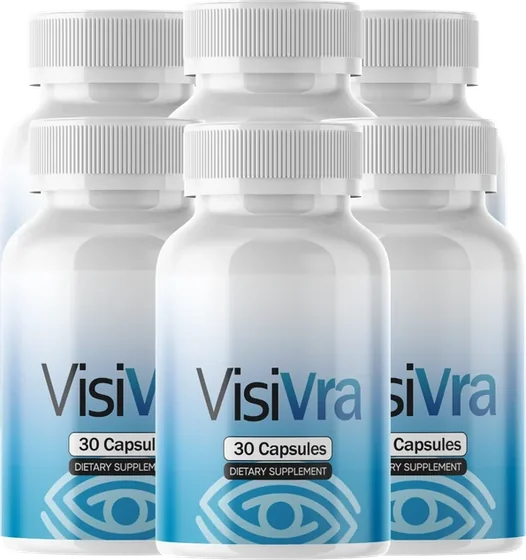
VisiVra is a dietary supplement sold online in vegetable capsules. Each bottle holds 30 capsules, a one-month supply at one capsule a day. The label says it is distributed by VisiVra of Aurora, Colorado.
The manufacturer calls its approach "The Ocular Support & Visual Clarity Matrix" and says the formula is designed to support visual clarity, healthy retinal function and long-term eye wellness, with antioxidant defense against oxidative stress and blue light. The sales page also says users "may begin to notice less eye strain, improved visual comfort, and more relaxed focus" within days.
Those are the company's claims. We found no published clinical trial of VisiVra itself, so the useful question is what's inside the capsule.
VisiVra Ingredients: What's on the Label
The Supplement Facts panel has two parts: seven vitamins and minerals with exact amounts, and a 351 mg proprietary blend.
| Nutrient (form) | Amount per capsule | % Daily Value |
|---|---|---|
| Vitamin A (as beta carotene) | 450 mcg RAE | 50% |
| Vitamin C (as ascorbic acid) | 90 mg | 100% |
| Vitamin E (as dl-alpha tocopheryl acetate) | 15 mg | 100% |
| Zinc (as zinc oxide) | 11 mg | 100% |
| Selenium (as selenium AAC) | 20 mcg | 36% |
| Copper (as copper gluconate) | 0.9 mg | 100% |
| Chromium (as chromium picolinate) | 15 mcg | 43% |
These are multivitamin-level amounts. The AREDS2 formula tested by the National Eye Institute (NEI) uses 500 mg of vitamin C, 400 IU of vitamin E, 80 mg of zinc and 2 mg of copper, plus 10 mg of lutein and 2 mg of zeaxanthin. VisiVra is not built like AREDS2 and shouldn't replace it if an eye doctor has recommended AREDS2. Chromium, mainly discussed for blood sugar, has no established role in eye health.
The blend. In label order, the 351 mg blend contains taurine, ginkgo biloba leaf, eyebright, grape seed extract, Coleus forskohlii root, alpha lipoic acid, rutin, quercetin, bilberry fruit extract, saffron stigma extract, lycopene, lutein (from marigold flower), zeaxanthin and astaxanthin.
That order matters. FDA rules require blend ingredients to be listed in descending order by weight, so lutein, zeaxanthin and astaxanthin, the names the marketing highlights most, are the smallest parts of the blend. Fourteen ingredients share 351 mg, about 25 mg each on average. There's no way to tell whether lutein comes close to the 10 mg used in AREDS2.
Other ingredients are a hypromellose (plant-based) capsule, rice flour, magnesium stearate and silicon dioxide.
How Each Ingredient Holds Up in Research
"Strong" means large randomized trials, "limited" means small or short trials, and "very limited" means mostly lab data or traditional use.
| Ingredient | What it's studied for | Evidence | Dose disclosed? |
|---|---|---|---|
| Lutein + zeaxanthin | Macular pigment, contrast, glare recovery | Moderate to strong at studied doses | No |
| Vitamins C and E, zinc, copper | AREDS formulas for intermediate AMD | Strong at high doses; VisiVra's are much lower | Yes |
| Vitamin A (beta carotene) | Normal vision in low light | Essential nutrient; deficiency is rare in the US | Yes |
| Saffron | Retinal function in mild to moderate AMD | Limited | No |
| Astaxanthin | Eye fatigue after screen work | Limited | No |
| Bilberry | Night vision | Weak | No |
| Ginkgo biloba | AMD, circulation | Very limited | No |
| Taurine, eyebright, grape seed, quercetin, rutin, alpha lipoic acid, lycopene, Coleus forskohlii | Antioxidant or traditional use | Very limited for eyes | No |
Lutein and zeaxanthin
These carotenoids collect in the macula, the part of the retina responsible for sharp central vision, where they form the macular pigment. The NEI notes they may act as antioxidants and help absorb high-energy blue and ultraviolet light. In a one-year placebo-controlled trial in 115 healthy young adults, 10 mg of lutein plus 2 mg of zeaxanthin a day raised macular pigment and improved contrast and how quickly vision recovered after a bright flash. In AREDS2, the same doses replaced beta-carotene in the formula for people with AMD. These are VisiVra's best-supported ingredients, but the amount per capsule is unknown and probably small.
Vitamin A (as beta carotene)
The retina needs vitamin A to turn light into signals, and a deficiency can cause night blindness, though deficiency is rare in the US. VisiVra supplies half the Daily Value as beta carotene. One caution: MedlinePlus notes that beta-carotene supplements may increase cancer risk in current and former smokers, and AREDS2 follow-up found that beta-carotene nearly doubled lung cancer risk in that study group. Those findings involved far higher doses than VisiVra's, but smokers and former smokers should still mention it to their doctor.
Vitamins C and E, zinc and copper
In the original AREDS trial, a high-dose mix of these nutrients plus beta-carotene lowered the risk of progressing from intermediate to advanced AMD by about 25%. That benefit came from doses several times higher than VisiVra's, in people who already had AMD, and the NEI says the formulas did not keep AMD from developing in people without it. VisiVra's 11 mg of zinc and 0.9 mg of copper are sensible daily-nutrition doses, not trial doses.
Saffron
In a randomized crossover trial of 100 adults with mild to moderate AMD, 20 mg of saffron a day for three months modestly improved visual function compared with placebo; average visual acuity improved by less than one letter on an eye chart. The study involved a diagnosed eye condition and a known dose. VisiVra doesn't list its saffron dose.
Astaxanthin
In a 6-week trial of 44 Japanese adults with screen-related eye fatigue, a capsule combining anthocyanins, astaxanthin and lutein helped preserve the eyes' focusing ability and improved some symptom scores compared with placebo. The trial was small and funded by supplement companies, so the evidence is interesting but thin.
Bilberry and ginkgo
Bilberry has a long folk reputation for night vision, but the National Center for Complementary and Integrative Health (NCCIH) says the most rigorous studies have not found it effective for improving night vision in healthy people. For ginkgo, a Cochrane review found only two small trials in AMD, too few to draw conclusions. NCCIH also warns that ginkgo may increase bleeding risk in people taking blood thinners such as warfarin.
Taurine, eyebright and the antioxidant extras
Taurine is one of the most abundant amino acids in the retina, and eyebright has a long history of traditional use for tired eyes, but neither has good human trials as an oral supplement for vision. Grape seed, quercetin, rutin, alpha lipoic acid, lycopene and Coleus forskohlii have little direct evidence for eye health at the small amounts likely present.
How to Take VisiVra
The label says to take one capsule a day. Lutein, zeaxanthin and beta carotene are fat-soluble, so taking it with a meal that contains some fat is a sensible habit. Per the label, don't exceed the dose; it isn't for people under 18 or pregnant or nursing women, and you should consult a physician first if you take medication or have a medical condition.
Who May Consider VisiVra, and Who Should Skip It
It may suit adults who want broad eye nutrition in one daily capsule, eat few leafy greens, or spend long hours reading, driving or on screens and want nutritional support alongside good eye habits.
Skip it or ask your doctor first if you:
- Have been diagnosed with intermediate or advanced AMD (ask about an AREDS2 formula with known doses)
- Take blood thinners or have surgery coming up (ginkgo)
- Smoke or used to smoke (beta carotene)
- Are pregnant, nursing or under 18
- Already take a multivitamin or another eye supplement (add up zinc, vitamin A and selenium)
Safety first
No supplement corrects nearsightedness, farsightedness, astigmatism or presbyopia, or replaces a dilated eye exam. Sudden vision changes, eye pain, flashes of light, a shower of new floaters or a shadow across your vision need prompt care from an eye doctor or an emergency room.
VisiVra Price, Packages and Guarantee
At the time of writing, the official website sells VisiVra only in multi-bottle packages:
| Package | Supply | Total price | Per bottle | Shipping |
|---|---|---|---|---|
| 2 bottles | 60 days | $158 | $79 | Added at checkout ($9.99 in the US) |
| 3 bottles | 90 days | $207 | $69 | Free US shipping |
| 6 bottles | 180 days | $294 | $49 | Free shipping |
The site shows higher "regular" totals next to these prices ($358, $537 and $1,074). Prices change, so check the official site for current pricing.
The guarantee. VisiVra has a 60-day money-back guarantee counted from the date of purchase. Per the return policy, you contact support first (support@visivra.com), then return all bottles, empty or not, with a note listing your name, email and order ID plus the packing slip. Return shipping is paid by the customer and isn't refunded. Refunds go to the original payment method, usually within 5 to 10 business days. Because the 60 days include shipping time, plan to decide within the first bottle or two.
Pros and Cons
Pros
- One capsule a day, simple 30-day bottle
- Includes lutein, zeaxanthin, saffron and astaxanthin, the eye nutrients with the most research
- Vitamin and mineral doses are clearly listed and moderate
- 60-day money-back guarantee
Cons
- Proprietary blend hides the dose of every botanical and carotenoid
- Key carotenoids are listed last, so amounts are likely small
- Not an AREDS2 formula; not designed for diagnosed AMD
- No clinical trial of the finished product
- Sold only in packages of 2, 3 or 6 bottles
- Ginkgo may interact with blood thinners
Where to Buy VisiVra
At the time of writing, VisiVra is sold through its official website, which handles orders, shipping and the 60-day guarantee. Ordering there is the simplest way to make sure the guarantee applies. If another seller lists it, confirm the refund terms before you buy.
VisiVra FAQ
Does VisiVra work?
There is no published trial of VisiVra itself. Some of its ingredients, especially lutein, zeaxanthin and saffron, have positive research, but the label doesn't disclose their doses. Think of it as nutritional support, not a fix for vision problems.
Can VisiVra replace my glasses?
No. Supplements don't correct refractive errors such as nearsightedness or presbyopia. Glasses, contact lenses or surgery do.
Is VisiVra the same as AREDS2?
No. AREDS2 uses 500 mg of vitamin C, 400 IU of vitamin E, 80 mg of zinc, 2 mg of copper, 10 mg of lutein and 2 mg of zeaxanthin. VisiVra uses much lower doses and doesn't list its lutein amount.
Does VisiVra have side effects?
The label doesn't list specific side effects. Ginkgo may raise bleeding risk with blood thinners, and any supplement can upset the stomach. Talk to your doctor if you take medication.
How long does VisiVra take to work?
The manufacturer says some people notice more comfortable eyes within days, but that is the company's claim. In the lutein and zeaxanthin research, macular pigment built up gradually over months. The guarantee window starts on the purchase date.
Is VisiVra FDA approved?
Dietary supplements aren't approved by the FDA before sale. The label carries the standard notice that its statements haven't been evaluated by the FDA.
Bottom Line
VisiVra puts the right names on the label: lutein, zeaxanthin, saffron and astaxanthin, plus everyday doses of vitamins A, C and E, zinc and copper. Its weak spot is transparency: the best-studied ingredients sit at the end of a proprietary blend with no disclosed amounts, and the product itself hasn't been studied.
If you want broad daily eye nutrition in one capsule and value a 60-day guarantee, VisiVra is a reasonable option. If you have AMD, ask your eye doctor about AREDS2 instead, and keep up with dilated eye exams either way.
For the bigger picture, read our guide to supplements for eye health, our list of foods good for your eyes, or all eye health articles. This review is general information; see our medical disclaimer.
References
- National Eye Institute. AREDS/AREDS2 Clinical Trials. NEI, 2025. link
- Chew EY, et al. Long-term Outcomes of Adding Lutein/Zeaxanthin and ω-3 Fatty Acids to the AREDS Supplements on Age-Related Macular Degeneration Progression: AREDS2 Report 28. JAMA Ophthalmology, 2022. link
- Hammond BR, et al. A double-blind, placebo-controlled study on the effects of lutein and zeaxanthin on photostress recovery, glare disability, and chromatic contrast. Investigative Ophthalmology & Visual Science, 2014. link
- Broadhead GK, et al. Saffron therapy for the treatment of mild/moderate age-related macular degeneration: a randomised clinical trial. Graefe's Archive for Clinical and Experimental Ophthalmology, 2019. link
- Kizawa Y, et al. Effects of anthocyanin, astaxanthin, and lutein on eye functions: a randomized, double-blind, placebo-controlled study. Journal of Clinical Biochemistry and Nutrition, 2021. link
- National Center for Complementary and Integrative Health. Bilberry: Usefulness and Safety. NCCIH. link
- Evans JR. Ginkgo biloba extract for age-related macular degeneration. Cochrane Database of Systematic Reviews, 2013. link
- National Center for Complementary and Integrative Health. Ginkgo: Usefulness and Safety. NCCIH. link
- MedlinePlus. Vitamin A. U.S. National Library of Medicine. link
- U.S. Food and Drug Administration. Dietary Supplement Labeling Guide: Chapter IV. Nutrition Labeling. FDA. link