GLP-1 Patches: What They Are, What's Inside, and Do They Work?
GLP-1 patches are everywhere online, but they don't contain GLP-1 drugs. Here's what's actually inside them, what the research says and how to shop without getting misled.
Reader-supported: if you buy through links on this page, we may earn a commission at no extra cost to you. It never changes what we write. How we research.
In this article
- What Is GLP-1?
- What Are Prescription GLP-1 Drugs?
- So What Are "GLP-1 Patches"?
- Why a GLP-1 Drug Can't Simply Go in a Patch
- What's Inside a Typical GLP-1 Patch?
- Do GLP-1 Patches Work?
- GLP-1 Patch vs. Ozempic
- Are GLP-1 Patches Safe?
- Red Flags When Shopping for GLP-1 Patches
- Where GLPro Fits
- Better-Supported Ways to Help Your Own GLP-1
- GLP-1 Patch FAQ
- Bottom Line
GLP-1 patches are all over social media and online stores, often next to the words "Ozempic" and "weight loss." The name suggests a skin version of the popular prescription drugs. That is not what they are.
This guide explains what GLP-1 is, how real GLP-1 medicines work, what "GLP-1 patches" actually contain and what the evidence says. It is based on published research and public health sources, not on marketing claims. We also cover safety, red flags and where the patch we reviewed, GLPro, fits in.
Key takeaways
- GLP-1 is a natural hormone your gut releases after meals. Prescription GLP-1 drugs (semaglutide, tirzepatide, liraglutide) are injections or tablets prescribed by a doctor.
- At the time of writing, no FDA-approved GLP-1 medicine comes as a skin patch.
- "GLP-1 patches" sold online contain plant extracts and nutrients marketed to "support" the body's own GLP-1, blood sugar or appetite.
- Some of those ingredients show modest effects when taken by mouth. Evidence that they work through the skin is thin.
- Patches are not a substitute for medical care. If you take diabetes medicine, talk to your doctor first.
What Is GLP-1?
GLP-1, short for glucagon-like peptide-1, is a small protein hormone made by cells in the lining of your intestine. Your body releases it when you eat (Holst, 2007).
GLP-1 has a few main jobs:
- It tells the pancreas to release insulin when blood sugar rises after a meal.
- It lowers glucagon, a hormone that raises blood sugar.
- It slows how quickly food leaves the stomach.
- It helps signal fullness, which can reduce how much you eat.
Natural GLP-1 doesn't last long. An enzyme called DPP-4 breaks it down within minutes, often before it even leaves the gut (Holst, 2007). That short life is the reason drugmakers had to design longer-lasting versions.
What Are Prescription GLP-1 Drugs?
GLP-1 receptor agonists are medicines that mimic the natural hormone but stay active for a day or a week. They help lower blood sugar and often lead to weight loss (Cleveland Clinic). Most are injections, though semaglutide also comes as a daily tablet.
| Medicine | Brand names | How it's taken | Main approved use |
|---|---|---|---|
| Semaglutide | Ozempic, Wegovy | Weekly injection | Type 2 diabetes (Ozempic), weight management (Wegovy) |
| Semaglutide tablets | Rybelsus | Daily tablet | Type 2 diabetes |
| Tirzepatide (GIP and GLP-1) | Mounjaro, Zepbound | Weekly injection | Type 2 diabetes (Mounjaro), weight management (Zepbound) |
| Liraglutide | Victoza, Saxenda | Daily injection | Type 2 diabetes (Victoza), weight management (Saxenda) |
| Dulaglutide | Trulicity | Weekly injection | Type 2 diabetes |
These drugs require a prescription and medical follow-up. Common side effects include nausea, vomiting and diarrhea, especially when starting or raising the dose. Rare but serious problems include pancreatitis and kidney injury. The risk of low blood sugar rises when they are combined with insulin or sulfonylureas, and they are not considered safe during pregnancy (Cleveland Clinic).
The FDA has also warned about unapproved and compounded versions of semaglutide and tirzepatide sold online. It urges people to get a prescription and buy only from state-licensed pharmacies (FDA, 2026).
So What Are "GLP-1 Patches"?
"GLP-1 patches" are adhesive skin patches sold online with names that use "GLP-1" or "GLP." They typically contain botanical extracts, minerals or vitamins. They are marketed to "support" the body's own GLP-1, blood sugar, appetite or metabolism.
Here's the key point: they are not GLP-1 medications. The patches we've seen don't claim to contain semaglutide, tirzepatide or any other GLP-1 drug. If a product sold without a prescription does claim that, treat it as a serious red flag.
They also sit in a regulatory gray zone. The FDA defines a dietary supplement as a product intended to be swallowed, so a skin patch doesn't fit neatly into that category (FDA, Questions and Answers on Dietary Supplements). What is clear is that these patches are not FDA-approved, and no agency has reviewed them for safety or effectiveness before sale.
Why a GLP-1 Drug Can't Simply Go in a Patch
Your skin's outer layer is built to keep things out. Traditional patches, like nicotine patches, work because they deliver small, fat-soluble drugs that are active at low doses (Prausnitz & Langer, 2008).
GLP-1 and its drug versions are peptides, chains of amino acids. Semaglutide's molecule is roughly 25 times heavier than nicotine's. Large molecules like this pass through intact skin poorly, which is a main reason GLP-1 drugs are given as injections.
Researchers are testing microneedle patches and other technologies for delivering large molecules such as insulin (Prausnitz & Langer, 2008). That is experimental medical technology. It is not what you get in a box of "GLP-1 patches" from an online store.
What's Inside a Typical GLP-1 Patch?
Formulas vary by brand, and many don't publish exact amounts. The ingredients that show up most often are borrowed from oral blood sugar supplements. Some brands also add caffeine-containing extracts or B vitamins.
| Ingredient | What it's marketed for | Evidence when taken by mouth | Evidence as a patch |
|---|---|---|---|
| Berberine | Blood sugar, "natural GLP-1" | Modest, from trials of mixed quality | None found |
| Cinnamon | Fasting blood sugar | Mixed | None found |
| Chromium | Insulin action | Modest, mixed | None found |
| Gymnema | Sugar cravings | Small studies | None found |
| Green tea extract | Metabolism, weight | Modest effect on weight | None found |
| Bitter melon | Blood sugar | Insufficient | None found |
| Fenugreek | Blood sugar, fullness | Small, low-quality studies | None found |
| Alpha-lipoic acid | Blood sugar | No better than placebo for glucose | None found |
According to the National Center for Complementary and Integrative Health (NCCIH), berberine may help lower blood sugar, mainly as an add-on, but the evidence is limited. Chromium and cinnamon have shown some benefits in reviews, and more research is needed. Alpha-lipoic acid was no better than placebo, and research on herbs like bitter melon and fenugreek has been limited in size and quality (NCCIH).
Cinnamon shows how mixed the picture is. A review of 10 trials found it lowered fasting blood sugar at doses of 120 mg to 6 g a day, but it didn't significantly change HbA1c, the longer-term marker (Allen et al., 2013). For a deeper look at each ingredient, see our GLPro review.
Do GLP-1 Patches Work?
The honest answer: there is no good evidence that consumer GLP-1 patches raise GLP-1 levels or meaningfully change blood sugar or weight. Three problems stand out.
- No published trials on branded patches. We found no peer-reviewed clinical trial testing a consumer "GLP-1 patch" in people.
- The research uses oral doses. Studies on these ingredients used capsules, powders or extracts, often at hundreds of milligrams to several grams a day. Few patch brands say how much of each ingredient a patch contains, and none we found published absorption data.
- The GLP-1 link runs through the gut. GLP-1 is released by intestinal cells in response to food (Holst, 2007). The best-known lab finding, that berberine boosted GLP-1 release, came from rats given berberine and from intestinal cells grown in a dish (Yu et al., 2010). A patch skips the gut entirely, so it's unclear whether that effect would happen at all.
None of this proves a patch can't help anyone. A daily routine can be a reminder of your goals. But that's a habit effect, not proof the ingredients are working.
What to Look for in GLP-1 Patch Reviews
Many "GLP-1 patch reviews" online are sales pages in disguise. Useful reviews show the full ingredient list, explain the research, mention downsides and state how they make money. Be wary of reviews built on before-and-after photos, star ratings with no source, or promises of specific pounds lost.
GLP-1 Patch vs. Ozempic
| Feature | GLP-1 patches | Ozempic (semaglutide) |
|---|---|---|
| Active ingredient | Plant extracts and nutrients | Semaglutide, a GLP-1 receptor agonist |
| How it's used | Skin patch, usually daily | Injection, once a week |
| Prescription | No | Yes |
| FDA status | Not FDA-approved | FDA-approved for type 2 diabetes |
| Evidence | No published trials on branded patches | Large clinical trials |
| Main risks | Skin irritation, unknown doses, interactions | Nausea, vomiting, diarrhea, rare serious effects |
A patch is not a cheaper or gentler version of Ozempic. They are different products with very different levels of evidence. If you're considering a GLP-1 medicine, your doctor can tell you whether you qualify. The NIDDK notes that weight-management drugs are generally considered for adults with a BMI of 30 or higher, or 27 or higher with a weight-related condition such as type 2 diabetes or high blood pressure (NIDDK).
Are GLP-1 Patches Safe?
There is little safety data on GLP-1 patches themselves. The main concerns are:
- Skin reactions. Adhesives and plant extracts can cause redness, itching or rash.
- Unknown doses. Without a full label, you can't know what you're getting or check it against your medicines.
- Interactions. Berberine may interact with some medicines (NCCIH). If ingredients are absorbed, they could add to the effect of diabetes drugs.
- Pregnancy and children. Berberine and fenugreek are not recommended during pregnancy, and there is no data on children.
- Delayed care. The biggest risk is using an unproven product in place of real treatment. NCCIH stresses that medical treatment for diabetes should not be replaced with unproven products.
Safety first
Talk to your doctor before using any GLP-1 patch, especially if you take insulin, metformin, a sulfonylurea or a prescription GLP-1 drug. Combining products sold to lower blood sugar with these medicines could cause low blood sugar (hypoglycemia). Warning signs include shakiness, sweating, confusion and a fast heartbeat. Never stop or change a prescribed medicine on your own. Do not use these patches during pregnancy or breastfeeding, or on children. See our medical disclaimer.
Red Flags When Shopping for GLP-1 Patches
- The product claims to contain semaglutide, tirzepatide or "real GLP-1" without a prescription.
- The ad promises it "works like Ozempic" or names a number of pounds you'll lose.
- There's no full ingredient list with amounts per patch.
- It says "FDA-approved." An FDA-registered facility is not the same as an approved product.
- The page relies on countdown timers, "only 3 left" alerts or huge crossed-out prices.
- There's no physical returns address, written refund policy or way to reach a person.
- A seller offers prescription GLP-1 drugs at a deep discount without screening by a licensed doctor. The FDA lists this as a warning sign (FDA, 2026).
Where GLPro Fits
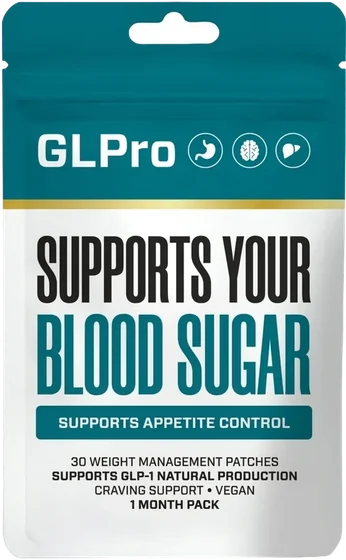
GLPro is one of the better-known patches in this category, and we reviewed it in detail. It is a once-a-day botanical patch, sold in packs of 30, that the manufacturer markets to support healthy blood sugar, appetite control and natural GLP-1 production.
In GLPro's favor: clear per-pack pricing, a published returns policy with contact details, a 60-day money-back guarantee, and no claim that it contains a prescription drug. The gaps are the same as the category's. The official order page doesn't publish a full ingredient panel or per-patch amounts, and there are no clinical studies on the patch itself. Our full GLPro review covers its likely ingredients, price and who should skip it.
Better-Supported Ways to Help Your Own GLP-1
Your body releases GLP-1 in response to food, so everyday habits matter. Meals built around protein, fiber and whole foods, regular physical activity, good sleep and steady weight management all support healthy blood sugar. We cover the details in Natural GLP-1: 9 Ways to Support Your Body's Own GLP-1 and How to Lower Blood Sugar Naturally.
If your blood sugar is high, or you've been told you have prediabetes or diabetes, work with your doctor. A patch can't replace that plan.
GLP-1 Patch FAQ
Do GLP-1 patches work?
There is no good evidence that they do. No published trials have tested branded GLP-1 patches in people, and the ingredient research comes from oral supplements. Whether enough of these ingredients passes through the skin is unknown.
Are GLP-1 patches safe?
There is little safety data on them. Skin irritation is possible, and labels often don't list doses. People who take diabetes medicine, are pregnant or breastfeeding, or are under 18 should talk to a doctor first.
What's the difference between a GLP-1 patch and Ozempic?
Ozempic contains semaglutide, a prescription GLP-1 drug given as a weekly injection and tested in large trials. GLP-1 patches contain plant extracts and nutrients, need no prescription and have not been tested in published trials.
Do GLP-1 patches contain semaglutide or tirzepatide?
They shouldn't. These drugs require a prescription, and the FDA warns against unapproved versions sold online. A patch that claims to contain them is a red flag.
Are GLP-1 patches FDA-approved?
No. At the time of writing, there is no FDA-approved GLP-1 medicine in patch form, and consumer GLP-1 patches are not reviewed by the FDA before sale.
Can I use a GLP-1 patch with metformin, insulin or a GLP-1 drug?
Only with your doctor's approval. Ingredients sold to lower blood sugar could add to these medicines and raise the risk of low blood sugar.
How long do GLP-1 patches take to work?
There's no reliable data. Brands make their own claims, but without trials there is no evidence-based timeline. If you try one, track your results with your doctor and use the refund window if it doesn't help.
Bottom Line
GLP-1 patches borrow the name of a powerful class of prescription drugs, but they don't contain those drugs. They are botanical products with limited evidence, mostly from oral studies, and no proof that their ingredients work through the skin.
If you decide to try one, choose a brand with clear pricing, a written refund policy and no drug claims, and keep your doctor in the loop. For a closer look at one option, read our GLPro review or browse our blood sugar guides.
References
- Holst JJ. The physiology of glucagon-like peptide 1. Physiological Reviews, 2007. link
- Cleveland Clinic. GLP-1 Agonists: What They Are, How They Work & Side Effects. Cleveland Clinic, 2023. link
- National Institute of Diabetes and Digestive and Kidney Diseases. Prescription Medications to Treat Overweight & Obesity. NIDDK. link
- U.S. Food and Drug Administration. FDA's Concerns with Unapproved GLP-1 Drugs Used for Weight Loss. FDA, 2026. link
- U.S. Food and Drug Administration. Questions and Answers on Dietary Supplements. FDA, 2026. link
- Prausnitz MR, Langer R. Transdermal drug delivery. Nature Biotechnology, 2008. link
- Yu Y, Liu L, Wang X, et al. Modulation of glucagon-like peptide-1 release by berberine: in vivo and in vitro studies. Biochemical Pharmacology, 2010. link
- National Center for Complementary and Integrative Health. Diabetes and Dietary Supplements: What You Need To Know. NCCIH, 2023. link
- Allen RW, Schwartzman E, Baker WL, et al. Cinnamon use in type 2 diabetes: an updated systematic review and meta-analysis. Annals of Family Medicine, 2013. link