GLPro Review (2026): What's Inside the Patch, Price, and Who It's For
GLPro is a once-a-day skin patch marketed to support healthy blood sugar, appetite control and the body's own GLP-1. We checked the label, the official site and the research behind its ingredients.
Reader-supported: if you buy through links on this page, we may earn a commission at no extra cost to you. It never changes what we write. How we research.
In this article
GLPro is one of the most searched "GLP-1 patches" online. It is a once-a-day adhesive patch that the manufacturer markets to support healthy blood sugar, appetite control and the body's natural GLP-1 production. In this GLPro review, we cover what the patch is, what we could and couldn't confirm about its ingredients, what it costs and who should skip it.
We did not test GLPro on people. We reviewed the label and the official site, and we read the published research on the ingredients linked to the patch. Our editorial policy explains how we work.
Key takeaways
- GLPro is a skin patch sold in packs of 30, one patch per day.
- It is not a GLP-1 medication like semaglutide or tirzepatide. It is marketed to "support" the body's own GLP-1.
- The official order page does not publish a full ingredient panel or per-patch amounts.
- Its likely ingredients (berberine, cinnamon, chromium and others) were studied mostly as oral supplements.
- At the time of writing, it costs $49 to $79 per pack, with a 60-day money-back guarantee.
- On insulin, metformin or a GLP-1 drug? Talk to your doctor first.
What Is GLPro?
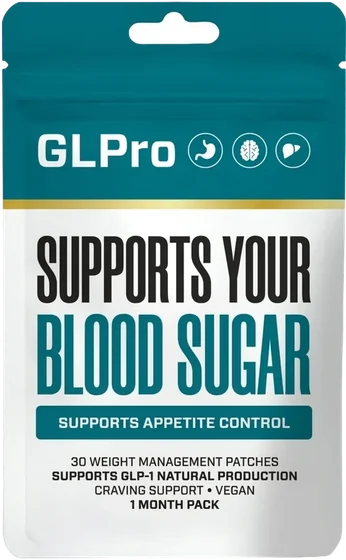
GLPro is an adhesive skin patch sold online. You may also see it called "GLPro Patches" or "GLPatches." Each pouch holds 30 patches and is labeled as a one-month pack.
The front of the pack calls them "weight management patches" and lists these claims: "Supports your blood sugar," "Supports appetite control," "Supports GLP-1 natural production," "Craving support" and "Vegan."
The manufacturer says the formula is made in the United States with ingredients sourced from around the world. The order page shows seals for GMO-free, GMP-certified and "Made in an FDA-registered facility." An FDA-registered facility is simply listed with the agency. It does not mean the FDA has reviewed or approved the product.
How GLPro Is Meant to Work
According to the manufacturer, GLPro delivers a plant-based blend through the skin over the course of the day. The pitch is that a patch skips the digestive system and releases its ingredients gradually instead of all at once.
The brand also says the blend supports the body's own GLP-1 activity. GLP-1 is a hormone your gut releases after meals. It helps release insulin, slows stomach emptying and signals fullness. Prescription GLP-1 drugs copy this hormone, but GLPro does not claim to contain it. Our guide to GLP-1 patches explains the difference.
Two facts are worth knowing before you buy:
- Skin is a strong barrier. Classic skin patches work best for small, fat-soluble molecules that are active at low doses (Prausnitz & Langer, 2008). Many plant compounds don't fit that profile.
- There are no published studies on GLPro itself. Claims about the patch rest on research into individual ingredients, mostly in oral form.
GLPro Ingredients: What We Could and Couldn't Confirm
At the time of writing, the official order page does not list a full ingredient panel, the amount of each ingredient per patch or the inactive ingredients, such as the adhesive. The pack images on the site don't show a facts panel either.
Promotional descriptions of GLPro name a plant-based blend built around berberine, cinnamon and chromium. Some also list gymnema, banaba leaf, bitter melon, alpha-lipoic acid, green tea extract and fenugreek, which are common in blood sugar formulas.
Good to know
Treat this ingredient list as unconfirmed until you read the label on the pack you receive. If the exact formula matters to you (allergies, pregnancy, medications), ask the support team for the full ingredient list and per-patch amounts before you order.
Here is what research says about each one. Almost all of these studies used supplements taken by mouth, not skin patches.
| Ingredient | What it is | Evidence strength (oral forms) |
|---|---|---|
| Berberine | Yellow compound from plants such as Coptis | Weak to moderate, from limited-quality trials |
| Cinnamon | Common spice, usually as bark extract | Mixed |
| Chromium | Essential trace mineral | Modest |
| Gymnema | Climbing plant used in Ayurvedic medicine | Small studies |
| Banaba leaf | Tree leaf that contains corosolic acid | Early and small |
| Bitter melon | Tropical gourd | Insufficient |
| Alpha-lipoic acid | Antioxidant the body also makes | Weak for blood sugar |
| Green tea extract | Source of catechins and caffeine | Modest, for weight |
| Fenugreek | Seed rich in soluble fiber | Small, low-quality studies |
Berberine
A 2015 meta-analysis of 27 trials with 2,569 people found that berberine plus lifestyle changes tended to lower fasting blood sugar, after-meal blood sugar and HbA1c more than lifestyle changes alone. The authors called the overall study quality limited (Lan et al., 2015). The National Center for Complementary and Integrative Health (NCCIH) notes that berberine may interact with some medicines and should not be used during pregnancy or breastfeeding.
Cinnamon
A review of 10 trials (543 people with type 2 diabetes) found that cinnamon, at 120 mg to 6 g a day, lowered fasting blood sugar but did not significantly change HbA1c. Results varied widely, and the best dose is unclear (Allen et al., 2013).
Chromium
A 2014 meta-analysis of 25 trials found modest improvements in HbA1c and fasting glucose in people with diabetes, mostly with chromium picolinate above 200 mcg a day (Suksomboon et al., 2014). NCCIH notes rare reports of kidney, liver and muscle problems after large doses.
Gymnema
A 2021 meta-analysis of 10 small studies (419 people with type 2 diabetes) reported lower fasting glucose, after-meal glucose and HbA1c compared with baseline (Devangan et al., 2021). Most comparisons were before-and-after rather than against a placebo, which weakens the evidence.
Banaba Leaf
Banaba's main compound, corosolic acid, has been tested in animal studies and small human trials. Reviewers describe the results as promising but early (Stohs et al., 2012).
Bitter Melon
A Cochrane review of four trials with 479 participants found no significant difference in blood sugar control between bitter melon and placebo, and called the evidence insufficient (Ooi et al., 2012).
Alpha-Lipoic Acid
According to NCCIH, alpha-lipoic acid was no better than placebo at lowering blood sugar, cholesterol or triglycerides across 10 studies.
Green Tea Extract
Green tea's catechins and caffeine may have a modest effect on body weight, depending on the product and the person. That research used drinks or oral extracts.
Fenugreek
Some research suggests fenugreek may help lower blood sugar in people with type 2 diabetes, but many studies were low quality. It is not considered safe during pregnancy in amounts larger than those found in food (NCCIH, Fenugreek).
The Real Question: Absorption Through the Skin
The studies above used daily oral doses measured in hundreds of milligrams or grams. We found no published data on how much of these ingredients reaches the bloodstream from a GLPro patch, and the brand doesn't publish per-patch amounts. That doesn't prove the patch can't help anyone. It does mean the oral research doesn't automatically apply to a patch.
How to Use GLPro
Each pack contains 30 patches, one for each day. Product materials describe this routine:
- Apply one patch to clean, dry skin, such as the upper arm, shoulder or hip.
- Wear it through the day.
- Replace it with a fresh patch the next day, ideally at the same time.
Rotate the spot you use, avoid broken or irritated skin, and remove the patch if you notice redness, itching or a rash. If the directions on your pack differ, follow the pack.
Who Might Consider GLPro, and Who Should Skip It
GLPro may appeal to adults who:
- Want a needle-free, no-pill option and are already working on diet, activity and sleep
- Prefer a simple once-a-day routine
- Accept that the evidence for the patch format is limited and value the 60-day refund window
Skip it, or talk to your doctor first, if you:
- Take insulin, metformin, a sulfonylurea, a GLP-1 drug (such as semaglutide or tirzepatide) or another glucose-lowering medicine
- Are pregnant, trying to become pregnant or breastfeeding
- Are under 18
- Have type 1 diabetes, kidney disease or liver disease
- Have sensitive skin or an allergy to adhesives or plant extracts
Safety first
GLPro is not a substitute for diabetes care or for any medicine your doctor prescribed. If you use insulin, metformin, a sulfonylurea, a GLP-1 drug or another blood sugar medicine, ask your doctor before trying any product sold to lower blood sugar. Adding one could push your glucose too low (hypoglycemia), with shakiness, sweating, confusion or a racing heart. Never stop or change a prescribed medicine on your own. Pregnant or breastfeeding women and children should not use it. See our medical disclaimer.
GLPro Price, Packages and Guarantee
At the time of writing (October 2026), the official order page lists three packages:
| Package | Supply | Price per pack | Total | Shipping |
|---|---|---|---|---|
| 2 packs | 60 days | $79 | $158 | Fee added at checkout |
| 3 packs | 90 days | $69 | $207 | Fee added at checkout |
| 6 packs | 180 days | $49 | $294 | Free US shipping |
When we checked, shipping on the 2- and 3-pack orders was $9.99 for US addresses. The 6-pack is listed with "free gifts." The page also shows higher crossed-out totals ($254, $381 and $762); those are the seller's reference prices, so focus on what you actually pay. Check the official site for current pricing.
GLPro comes with a 60-day money-back guarantee, and the order page promises a refund "for absolutely any reason." The returns page adds the details:
- Request a return authorization within 60 days of purchase.
- Ship the product back, opened or unopened, within 14 days, at your own shipping cost.
- The refund goes to your original payment method after the return is inspected.
Good to know
The returns page also includes generic wording that "sale items cannot be refunded," which seems to clash with the guarantee. If you plan to rely on it, get the terms confirmed in writing before you order. The contact page lists glpatche@bestcsupport.com and +1 (720) 615-3649.
GLPro Pros and Cons
Pros
- Needle-free, once-a-day patch that is easy to fit into a routine
- Its likely ingredients have been studied for blood sugar in oral form
- Vegan and made in the USA, according to the manufacturer
- Clear per-pack pricing, with free US shipping on the 6-pack
- 60-day money-back guarantee
Cons
- Full ingredient panel and per-patch amounts not published on the official order page
- No clinical studies on the GLPro patch itself
- Little evidence that these ingredients absorb well through the skin
- Not a GLP-1 medication and not a substitute for diabetes care
- Shipping fee on smaller packages, and you pay return shipping
Where to Buy GLPro
The manufacturer sells GLPro through its official website. Ordering there is the simplest way to get the current packages and make sure the 60-day guarantee covers your purchase. Be cautious with listings elsewhere that use the GLPro name but show different packaging, patch counts or prices.
Daily Care Plus may earn a commission if you buy through links on this page. It doesn't change your price or our assessment.
GLPro FAQ
Is GLPro a GLP-1 medication?
No. Prescription GLP-1 drugs such as semaglutide and tirzepatide are injections or tablets prescribed by a doctor. GLPro is a botanical patch marketed to support the body's own GLP-1, and its marketing does not say it contains any drug.
Does GLPro actually work?
There are no published studies on GLPro itself. Some of its likely ingredients, such as berberine, chromium and cinnamon, have shown modest effects on blood sugar when taken by mouth. Whether a patch delivers enough of them hasn't been shown.
Is GLPro safe?
There is no published safety data on the patch. Skin irritation is possible with any adhesive patch. People on diabetes medicine, pregnant or breastfeeding women and children should check with a doctor first.
How many patches come in a pack of GLPro?
Each pack holds 30 patches, a one-month supply at one patch per day.
Can I use GLPro with metformin, insulin or Ozempic?
Only with your doctor's approval. Products sold to lower blood sugar could add to the effect of these medicines and raise the risk of low blood sugar.
Is GLPro FDA-approved?
No. The "FDA-registered facility" seal refers to where it is made, not to an approval of the product.
How does the GLPro refund work?
Request a return authorization within 60 days of purchase, send the product back at your own shipping cost, and the refund goes to your original payment method.
Bottom Line
GLPro is a convenient, once-a-day patch with clear pricing and a 60-day guarantee. Its weak spots are transparency and evidence: the official order page doesn't publish a full ingredient panel or doses, there are no studies on the patch itself, and the research on its likely ingredients used oral forms.
If you try it, treat it as an add-on to the habits that matter most for blood sugar: regular meals with fiber and protein, daily movement, good sleep and your doctor's plan. Our guides on how to lower blood sugar naturally and natural ways to support GLP-1 cover those steps. Browse more in our blood sugar section.
References
- National Center for Complementary and Integrative Health. Diabetes and Dietary Supplements: What You Need To Know. NCCIH, 2023. link
- National Center for Complementary and Integrative Health. Fenugreek: Usefulness and Safety. NCCIH, 2025. link
- Lan J, Zhao Y, Dong F, et al. Meta-analysis of the effect and safety of berberine in the treatment of type 2 diabetes mellitus, hyperlipemia and hypertension. Journal of Ethnopharmacology, 2015. link
- Allen RW, Schwartzman E, Baker WL, et al. Cinnamon use in type 2 diabetes: an updated systematic review and meta-analysis. Annals of Family Medicine, 2013. link
- Suksomboon N, Poolsup N, Yuwanakorn A. Systematic review and meta-analysis of the efficacy and safety of chromium supplementation in diabetes. Journal of Clinical Pharmacy and Therapeutics, 2014. link
- Devangan S, Varghese B, Johny E, et al. The effect of Gymnema sylvestre supplementation on glycemic control in type 2 diabetes patients: a systematic review and meta-analysis. Phytotherapy Research, 2021. link
- Stohs SJ, Miller H, Kaats GR. A review of the efficacy and safety of banaba (Lagerstroemia speciosa L.) and corosolic acid. Phytotherapy Research, 2012. link
- Ooi CP, Yassin Z, Hamid TA. Momordica charantia for type 2 diabetes mellitus. Cochrane Database of Systematic Reviews, 2012. link
- Prausnitz MR, Langer R. Transdermal drug delivery. Nature Biotechnology, 2008. link