How to Lower Blood Sugar Naturally: 12 Habits Backed by Research (and How They Affect A1C)
Twelve everyday habits with real research behind them, a table of foods that help steady blood sugar, how A1C works and how long it takes to move, and an honest look at blood sugar supplements.
Reader-supported: if you buy through links on this page, we may earn a commission at no extra cost to you. It never changes what we write. How we research.
In this article
High blood sugar rarely has one cause, so it rarely has one fix. The good news is that the habits with the strongest evidence are ordinary ones: what goes on your plate, the order you eat it in, how much you move and how well you sleep. Done consistently, they can lower day-to-day glucose readings and, over a few months, your A1C. Below are 12 of them, plus the foods, A1C facts and supplement evidence worth knowing.
Key takeaways
- The best-supported natural ways to lower blood sugar are more fiber, protein at meals, eating carbs last, swapping sugary drinks, walking after meals, regular exercise, modest weight loss and enough sleep.
- In the Diabetes Prevention Program, lifestyle changes cut the risk of developing type 2 diabetes by 58% in people at high risk.
- A1C reflects your average blood sugar over about three months, so give changes at least that long before judging results.
- Supplements such as berberine, cinnamon, chromium and magnesium have weak to moderate evidence. None replaces medical treatment.
Safety first
If you have diabetes or take any medicine that lowers blood sugar (especially insulin or a sulfonylurea), work with your doctor before changing your diet, exercise routine or supplements. Lifestyle changes and supplements can add to your medicine's effect and cause dangerously low blood sugar (hypoglycemia). Never stop or reduce a prescribed medication on your own. Your care team can adjust doses safely as your numbers improve. If you are pregnant or have kidney or liver disease, get personal advice first. See our medical disclaimer.
Know Your Numbers First
It helps to know what you're aiming for. Doctors use the A1C test, along with fasting and other glucose tests, to sort results into three ranges. According to the National Institute of Diabetes and Digestive and Kidney Diseases (NIDDK):
| A1C result | What it means |
|---|---|
| Below 5.7% | Normal |
| 5.7% to 6.4% | Prediabetes |
| 6.5% or above | Diabetes (confirmed with a repeat test) |
If you already have diabetes, your personal targets come from your care team. The American Diabetes Association (ADA) suggests an A1C of 7% or less for most adults with diabetes, but your target may be higher or lower depending on your age, health and risk of low blood sugar.
12 Habits to Lower Blood Sugar Naturally
1. Build Your Plate Around Non-Starchy Vegetables
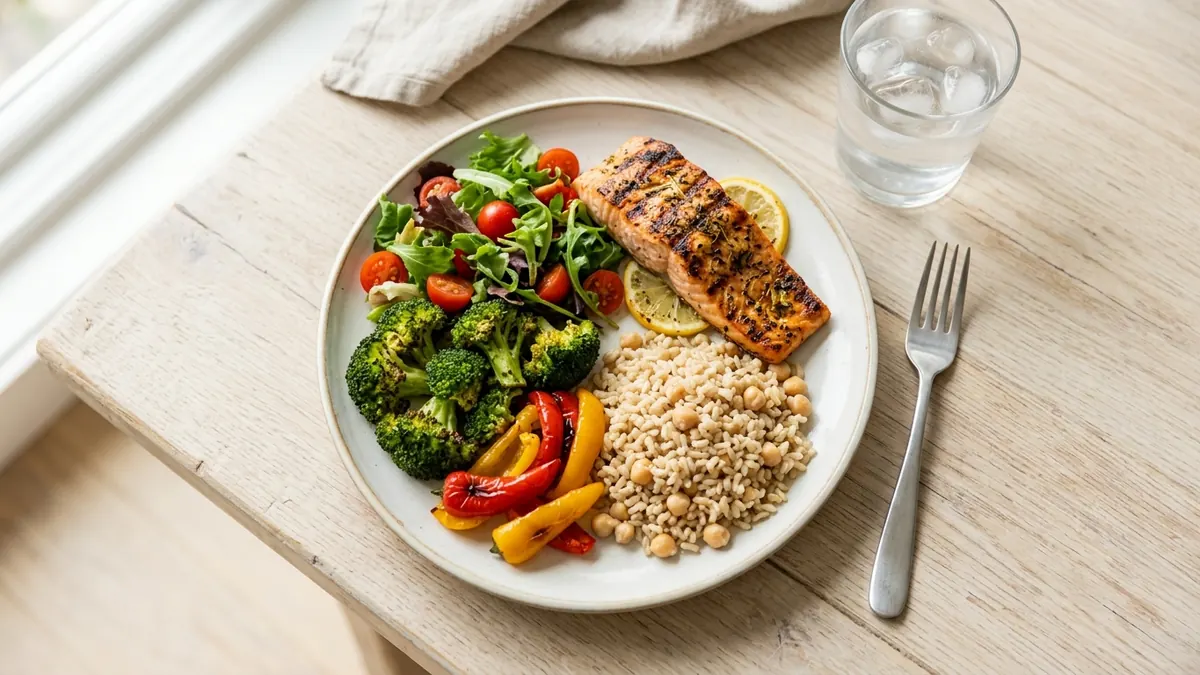
A simple starting point is the plate method many diabetes educators teach: fill half your plate with non-starchy vegetables (leafy greens, broccoli, peppers, green beans, cauliflower), a quarter with protein and a quarter with carbohydrate foods. It cuts the share of fast-digesting carbs without counting anything, and it adds fiber automatically.
2. Eat More Fiber, Especially the Gel-Forming Kind
Fiber slows digestion, so sugar enters your blood more gradually. A large series of reviews in The Lancet found the strongest health benefits when people ate about 25 to 29 grams of fiber a day, which is more than most Americans get.
Viscous (gel-forming) fiber stands out for blood sugar. A 2019 meta-analysis in Diabetes Care pooled 28 trial comparisons in people with type 2 diabetes. A median of about 13 grams a day of viscous fiber, on top of usual care, lowered A1C by 0.58 percentage points and also lowered fasting glucose. Good sources include oats, barley, beans, lentils, chia, flaxseed and psyllium. Increase fiber slowly and drink water to limit bloating.
3. Include Protein at Every Meal
Protein digests slowly and has little direct effect on blood sugar, so pairing it with carbohydrates helps blunt the rise after a meal. It also keeps you full longer. A breakfast of eggs or Greek yogurt with berries usually produces a gentler glucose curve than toast and juice. If you have kidney disease, ask your doctor how much protein is right for you.
4. Eat Your Carbs Last
The order of your food matters. In a Weill Cornell study of 16 people with type 2 diabetes, eating protein and vegetables first and carbohydrates 10 minutes later made the blood sugar rise 53% smaller than eating the carbohydrates first. Insulin needs were lower, and the gut hormone GLP-1 was higher. Our article on natural GLP-1 explains why that hormone matters.
5. Choose Whole, Minimally Processed Carbohydrates
Not all carbs act the same. Whole foods like beans, lentils, intact whole grains, whole fruit and starchy vegetables with the skin come packaged with fiber and digest more slowly than white bread, pastries, crackers and sugary cereals. Portion size still counts: a big bowl of brown rice can raise blood sugar more than a small serving of white rice.
6. Rethink What You Drink
Sugary drinks, sweet coffee drinks and fruit juice deliver sugar in liquid form, with no fiber to slow it down. Swapping them for water, sparkling water, unsweetened tea or black coffee is one of the fastest ways to reduce glucose spikes. If you drink alcohol, keep it moderate and have it with food, because alcohol can also cause low blood sugar in people taking insulin or sulfonylureas.
7. Take a Short Walk After Meals
Muscles use glucose for fuel, and they pull it from your blood while you move. A 2022 meta-analysis in Sports Medicine found that breaking up long periods of sitting with short bouts of light walking lowered post-meal blood sugar and insulin compared with sitting still. Walking worked better than simply standing up. A 10- to 15-minute walk after your largest meal is an easy place to start.
8. Exercise Most Days, Including Strength Training
Regular activity makes your body more sensitive to insulin, so the insulin you make works better. The lifestyle program in the Diabetes Prevention Program aimed for at least 150 minutes of physical activity a week, such as 30 minutes of brisk walking five days a week. Add strength training two or three times a week. More muscle gives glucose more places to go.
9. Lose a Modest Amount of Weight If You Have Extra
You don't need dramatic weight loss to see a difference. In the Diabetes Prevention Program, a landmark trial of 3,234 adults with elevated blood sugar, the lifestyle group aimed to lose 7% of body weight and exercise 150 minutes a week. Over about three years, they were 58% less likely to develop type 2 diabetes than the placebo group, a bigger effect than the medicine metformin had in the same trial. For a 200-pound person, 7% is 14 pounds.
10. Get Enough Sleep
Sleep loss affects blood sugar fast. In a classic study in The Lancet, healthy young men who were limited to four hours in bed for six nights had worse glucose tolerance than when they were fully rested. Most adults need at least seven hours a night. A regular bedtime and less screen time before bed help. If you snore loudly or wake up exhausted, ask your doctor about sleep apnea, which is common in people with type 2 diabetes.
11. Manage Stress
Stress hormones such as cortisol and adrenaline tell your liver to release stored sugar. That's useful in an emergency but unhelpful when stress is constant. Walking, breathing exercises, time outdoors, prayer or meditation, and time with people you trust are all reasonable tools to use alongside the habits above.
12. Track Your Numbers
What gets measured gets managed. If you have diabetes, your doctor may ask you to check your blood sugar at home or wear a continuous glucose monitor, which shows how specific meals, walks and late nights affect you. NIDDK notes that experts recommend an A1C test at least twice a year for people with diabetes, and more often when treatment goals aren't being met.
Foods That Help Steady Blood Sugar
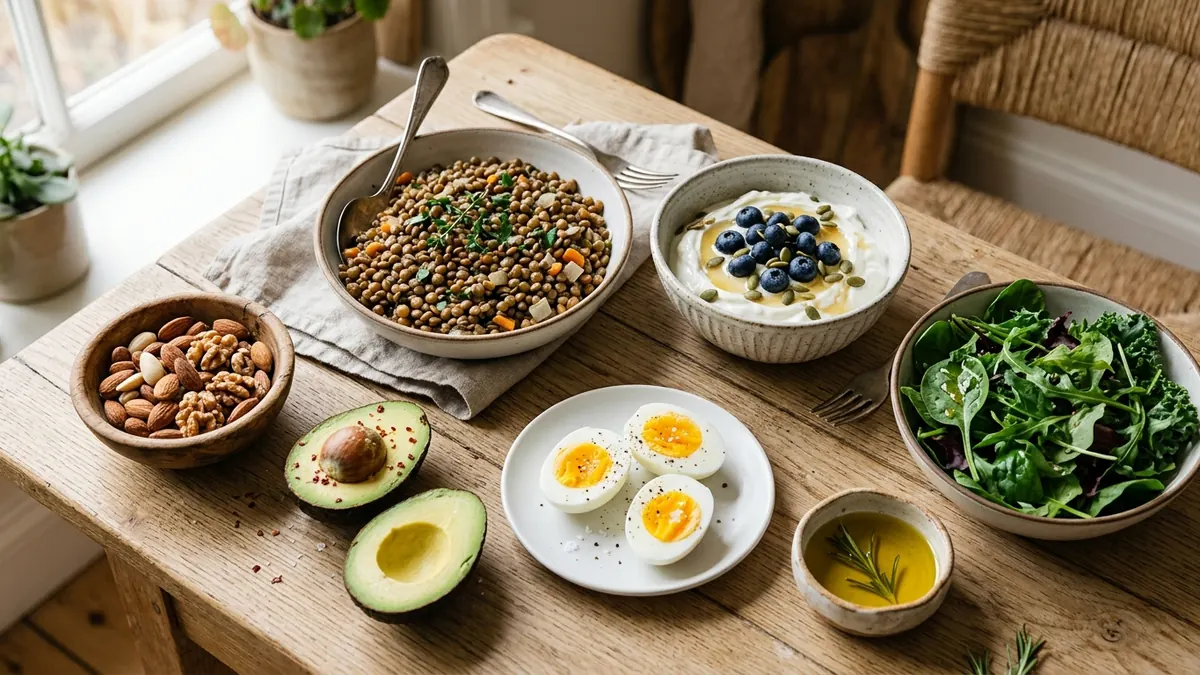
No food lowers blood sugar on its own the way medicine does. These foods help because they are high in fiber, protein or healthy fat, which slows the rise in glucose after a meal.
| Food | Why it helps | Easy way to use it |
|---|---|---|
| Non-starchy vegetables | Very few carbs, lots of fiber | Fill half your plate; eat them first |
| Beans, lentils, chickpeas | Fiber plus protein in one food | Add to soups, salads or bowls |
| Oats and barley | Rich in gel-forming beta-glucan fiber | Steel-cut oats instead of sugary cereal |
| Nuts and seeds | Healthy fats, protein and fiber | A small handful instead of chips |
| Chia and flaxseed | Gel-forming fiber | Stir into yogurt or oatmeal |
| Eggs, fish, poultry, tofu | Protein with little effect on glucose | Include at every meal |
| Plain Greek yogurt or kefir | Protein, and live cultures in some products | Top with berries instead of buying sweetened versions |
| Berries and whole fruit | Fiber slows the sugar they contain | Eat the fruit; skip the juice |
| Olive oil and avocado | Unsaturated fats slow digestion | Use instead of butter or creamy dressings |
| Water, unsweetened tea, black coffee | No sugar | Replace soda and juice |
Understanding A1C: What It Measures and How Long Changes Take
What A1C Measures
When glucose is in your blood, some of it sticks to hemoglobin, the protein in red blood cells that carries oxygen. The A1C test measures the percentage of hemoglobin with glucose attached. Because red blood cells live about three months, the result reflects your average blood sugar over roughly the past two to three months, according to the ADA and NIDDK.
Your A1C can also be converted into an estimated average glucose (eAG) in mg/dL, the same units your meter uses:
| A1C | Estimated average glucose |
|---|---|
| 5.7% | about 117 mg/dL |
| 6.5% | about 140 mg/dL |
| 7% | about 154 mg/dL |
| 8% | about 183 mg/dL |
How Long It Takes A1C to Change
Habits like walking after meals and eating carbs last can change your glucose readings within days. A1C moves more slowly because it's an average. NIDDK notes that the most recent 30 days affect the number more than earlier months, so a test at six to eight weeks may already show some change. The fair test, though, is a repeat A1C about three months after you start.
How much can habits move it? That depends on where you start and how many changes you stack. Viscous fiber alone lowered A1C by about half a percentage point in pooled trials. Your doctor can tell you what's realistic for you.
When A1C Can Be Misleading
A1C isn't perfect. NIDDK lists several things that can make it falsely high or low, including iron-deficiency anemia, recent blood loss or transfusion, kidney failure, liver disease and certain inherited hemoglobin variants. If your A1C doesn't match your home readings, ask your doctor whether another test makes sense.
Supplements to Lower Blood Sugar: What the Evidence Says
Supplements get a lot of attention, but the evidence is weaker than for the habits above. The National Center for Complementary and Integrative Health (NCCIH) says that for a few supplements, such as chromium, cinnamon and berberine, there is weak evidence of a possible benefit, and that most studies are small and inconsistent.
| Supplement | What studies show | Main cautions |
|---|---|---|
| Berberine | A 2021 review of 46 studies found it may lower blood sugar and insulin resistance in type 2 diabetes; most studies came from one country and some were poor quality | Digestive upset; drug interactions; avoid in pregnancy and breastfeeding |
| Cinnamon | A 2019 review of 16 studies found lower fasting glucose and insulin resistance, with wide differences between products | Cassia cinnamon contains coumarin, a concern for people with liver disease |
| Chromium | A 2022 review of 16 studies suggested it may improve A1C and fasting glucose | Rare reports of kidney and liver damage at large doses |
| Magnesium | Diets higher in magnesium are linked to lower diabetes risk; supplement effects on blood sugar are uncertain | Supplemental upper limit for adults is 350 mg a day; diarrhea at high doses |
| Psyllium and other viscous fiber | Lowered A1C and fasting glucose in pooled trials | Bloating if increased too fast; take apart from medicines |
| Alpha-lipoic acid | A 2019 review of 10 studies found it no better than placebo for blood sugar | Headache, heartburn, nausea |
| Bitter melon, fenugreek, ginseng | Research is limited and hasn't shown they work | Little reliable safety data in diabetes |
A few rules of thumb:
- Supplements add to medicine. If you take insulin or a sulfonylurea, adding berberine or another glucose-lowering product can push you into hypoglycemia.
- Watch for big promises. The FDA warns about products claiming to be a "natural diabetes cure" or to "replace your diabetes medicine."
- Protect your kidneys. NCCIH notes that some supplements have been linked to kidney damage, a particular concern because diabetes is the leading cause of kidney disease. Tell your pharmacist about every supplement you take.
Where GLPro Fits
If you want a simple daily product alongside your habits, GLPro is one option in a newer category: a needle-free patch worn on the skin. The manufacturer says its plant-based blend supports healthy blood sugar, appetite control and the body's natural GLP-1 production. The label describes 30 vegan patches per one-month pack.
Keep expectations grounded. We found no published clinical trials of GLPro itself, and the official order page we checked doesn't list a full ingredient panel with amounts. It isn't a diabetes treatment and shouldn't replace any medicine. If you take glucose-lowering medication, show the label to your doctor first.
Read the full GLPro review, or learn how the category works in GLP-1 patches: what they are, what's inside, and do they work?
FAQ
How can I lower my blood sugar naturally and quickly?
A 10- to 15-minute walk after eating can help bring a post-meal rise down. If you have diabetes and your reading is very high, follow your care team's plan, and seek urgent care if you feel very unwell, confused or are vomiting.
How long does it take to lower A1C naturally?
A1C reflects about three months of blood sugar, so the fair test is a repeat A1C about three months after you change your habits. Daily readings can improve much sooner.
Can I lower my A1C without medication?
Some people with prediabetes or early type 2 diabetes reach their targets with lifestyle changes, but many need medicine, and that's not a failure. Decide with your doctor, and never stop a prescribed medicine on your own.
What foods lower blood sugar?
No food lowers blood sugar like medicine does. Non-starchy vegetables, beans, lentils, oats, barley, nuts, seeds and protein foods help keep it steadier because they slow how fast sugar enters your blood.
What is the best supplement to lower blood sugar?
No supplement is proven to work as well as medical treatment. Berberine and viscous fiber like psyllium have the most research, but the evidence is still limited.
Can I take berberine with metformin or other diabetes medicines?
Only with your doctor's approval. Berberine may interact with medicines and can add to their blood sugar-lowering effect, which raises the risk of hypoglycemia.
What are the signs of low blood sugar?
According to MedlinePlus, symptoms often come on quickly and can include shaking, sweating, nervousness, irritability or confusion, dizziness and hunger. For many people with diabetes, low means below 70 mg/dL. Ask your care team what your number is and how to treat a low.
For more, browse our blood sugar guides.
References
- National Institute of Diabetes and Digestive and Kidney Diseases (NIDDK). The A1C Test and Diabetes. NIH. link
- American Diabetes Association. Understanding A1C. link
- Knowler WC, Barrett-Connor E, Fowler SE, et al. Reduction in the incidence of type 2 diabetes with lifestyle intervention or metformin. New England Journal of Medicine, 2002. link
- Reynolds A, Mann J, Cummings J, et al. Carbohydrate quality and human health: a series of systematic reviews and meta-analyses. The Lancet, 2019. link
- Jovanovski E, Khayyat R, Zurbau A, et al. Should viscous fiber supplements be considered in diabetes control? Results from a systematic review and meta-analysis of randomized controlled trials. Diabetes Care, 2019. link
- Shukla AP, Andono J, Touhamy SH, et al. Carbohydrate-last meal pattern lowers postprandial glucose and insulin excursions in type 2 diabetes. BMJ Open Diabetes Research and Care, 2017. link
- Buffey AJ, Herring MP, Langley CK, et al. The acute effects of interrupting prolonged sitting time in adults with standing and light-intensity walking on biomarkers of cardiometabolic health in adults: a systematic review and meta-analysis. Sports Medicine, 2022. link
- Spiegel K, Leproult R, Van Cauter E. Impact of sleep debt on metabolic and endocrine function. The Lancet, 1999. link
- National Center for Complementary and Integrative Health (NCCIH). Diabetes and Dietary Supplements: What You Need To Know. NIH. link
- MedlinePlus. Hypoglycemia. National Library of Medicine. link