Glyco Barrier Reviews (2026): Ingredients, Price and What to Know Before You Buy
A careful look at Glyco Barrier, liquid drops marketed for blood sugar support: what the company discloses about the formula, how the named ingredients compare with the research, what it costs and who should talk to a doctor first.
Reader-supported: if you buy through links on this page, we may earn a commission at no extra cost to you. It never changes what we write. How we research.
Glyco Barrier
Liquid drops marketed for healthy blood sugar and glucose metabolism support
- Format
- Liquid drops (2 fl oz / 59 mL bottle)
- Price
- $49–$79 per bottle
- Guarantee
- 60-day guarantee (stated at checkout)
- Sold at
- Official website only
In this article
- What Is Glyco Barrier?
- Glyco Barrier Ingredients: What the Company Discloses
- How the Named Ingredients Hold Up in Research
- Does Glyco Barrier Work?
- How to Take Glyco Barrier
- Possible Reactions and Who Should Skip It
- Glyco Barrier Price, Packages and Guarantee
- Glyco Barrier Pros and Cons
- Where to Buy Glyco Barrier
- Glyco Barrier FAQ
- Bottom Line
Key takeaways
- Glyco Barrier is a liquid supplement in a 2 fl oz (59.14 mL) dropper bottle. The official directions are 1 mL twice a day, so a bottle holds 60 servings, about a 30-day supply.
- The company says it combines chromium picolinate with a 200 mg proprietary blend of 20 herbal ingredients, and it names seven of them, including gymnema, ginseng and green tea.
- The official site doesn't show the Supplement Facts panel, so the chromium dose and the amount of each herb aren't public.
- Some named ingredients have modest blood sugar research at known doses. We found no published clinical trial of Glyco Barrier itself.
- At the time of writing, it costs $49 to $79 per bottle depending on the package, with a 60-day guarantee.
Glyco Barrier (also written GlycoBarrier) is a new liquid supplement marketed for healthy blood sugar, and most Glyco Barrier reviews online are promotional. For this one, we read the official website and its policy pages, the producer's order page and checkout, and the published research on the ingredients the company names. We didn't test the product, and there are no customer stories here. Our editorial policy explains how we work.
What Is Glyco Barrier?
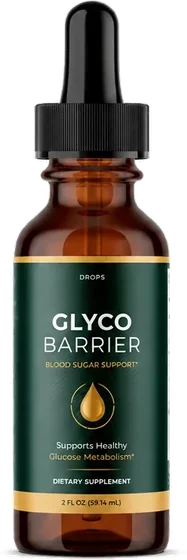
Glyco Barrier is a dietary supplement in an amber glass dropper bottle. The front label reads "Drops," "Blood Sugar Support," "Supports Healthy Glucose Metabolism" and "2 Fl Oz (59.14 mL)." The site's terms say it is distributed by Glyco Barrier of Aurora, Colorado, and the order page notes that a third-party online retailer handles the sale.
The manufacturer calls it "a daily metabolic-support formula that helps keep your glucose levels in a healthy range, for steady energy, fewer cravings, and the calm of feeling in control," and says the drops "absorb faster than capsules or pills." The home page also lists "Doctor formulated," "Non-GMO" and "GMP certified," plus figures such as "50,000+ bottles shipped" and "96% felt steadier in 8 weeks." It doesn't name the doctor or explain how those numbers were measured.
Those are the company's claims. We found no published study of how this liquid is absorbed and no clinical trial of the product, so the useful questions are what's in the bottle and how much of it.
Glyco Barrier Ingredients: What the Company Discloses
At the time of writing, the official site doesn't show the Supplement Facts panel from the back of the bottle. Its FAQ says the formula "combines Chromium Picolinate with a 200 mg proprietary herbal blend of 20 ingredients," and the site names seven of those herbs. We couldn't find the other 13 listed anywhere.
| Ingredient | Amount listed? | What research suggests | Evidence strength |
|---|---|---|---|
| Chromium (as picolinate) | No | Small A1C and fasting glucose drops in diabetes, mainly above 200 mcg a day | Modest |
| Gymnema sylvestre leaf | No | Lower blood sugar in type 2 diabetes; an early trial used 400 mg a day | Promising but low quality |
| Ginseng root | No | Slightly lower fasting glucose; no clear change in A1C | Modest |
| Green tea leaf | No | Very small drops in fasting glucose and A1C | Small |
| Astragalus root | No | Small, mostly low-quality studies alongside metformin | Limited |
| Maca root | No | Studied for energy and mood, not blood sugar | Very limited |
| Coleus forskohlii root | No | Studied mainly for weight | Very limited |
| Cayenne pepper fruit | No | Capsaicin studied for metabolism and appetite | Very limited |
| 13 more blend ingredients | Not named | Unknown | Unknown |
Why the Missing Label Matters
- The amounts are probably small. Twenty ingredients sharing 200 mg is an average of 10 mg each. The site doesn't say whether 200 mg is per serving or per day, but even at 400 mg a day, the average would be about 20 mg per ingredient. The gymnema study below used 400 mg a day of gymnema alone.
- The chromium dose is unknown. The company calls chromium "clinically studied," but you can't compare its amount with trial doses.
- The order is unknown. FDA rules require blend ingredients to be listed from most to least by weight. That order would show whether gymnema or maca makes up most of the blend.
Good to know
The official "Scientific References" page lists studies on green tea with caffeine, curcumin with piperine, berberine, Garcinia cambogia, cinnamon, chromium, capsaicin-like compounds and dietary fiber. Curcumin, berberine, Garcinia, cinnamon and fiber aren't among the ingredients the site names, and the page itself says the studies "relate to individual ingredients and not to Glyco Barrier as a finished product." If berberine is what caught your eye, see our guide to berberine benefits.
How the Named Ingredients Hold Up in Research
Most of these trials enrolled people with type 2 diabetes and used known doses of a single ingredient.
Chromium
Chromium is an essential trace mineral that helps the body use glucose. A meta-analysis of 25 randomized trials in people with diabetes found that chromium lowered A1C by about 0.55 percentage points and fasting glucose by about 21 mg/dL on average. The effects showed up especially with chromium picolinate, the form Glyco Barrier uses, and the authors wrote that glycemic control "may improve" with more than 200 mcg a day. NCCIH adds that chromium supplements may cause stomach pain and bloating.
Gymnema Sylvestre
Gymnema, an herb from Ayurvedic medicine, is one of the most studied for blood sugar. A 2021 meta-analysis of 10 studies with 419 people with type 2 diabetes found lower fasting glucose, after-meal glucose and A1C after gymnema. But it compared people with their own starting values rather than with a placebo group, which can make results look stronger than they are. In a small 1990 study, 22 people with type 2 diabetes took 400 mg a day of a gymnema leaf extract with their usual pills, and their drug doses could be lowered. That's also a reminder that gymnema may add to the effect of diabetes medicines.
Ginseng
The site says "ginseng root" without naming the species. A meta-analysis of 16 trials of Panax ginseng found that it lowered fasting blood glucose by about 0.31 mmol/L (about 6 mg/dL) compared with control, but it didn't significantly change A1C overall, and most trials lasted less than 12 weeks. NCCIH says Asian ginseng "might lower blood sugar levels," advises people with diabetes to check with their provider first, and lists trouble sleeping as its most common side effect.
Green Tea Leaf
A meta-analysis of 17 trials with 1,133 people found that green tea lowered fasting glucose by about 0.09 mmol/L (under 2 mg/dL) and A1C by about 0.3 percentage points. Those effects are small, even at study doses.
Astragalus Root
NCCIH says there is "not sufficient reliable scientific evidence" to know whether astragalus helps any health condition. It describes a 2024 review of 20 studies in which adding astragalus to metformin lowered fasting glucose and A1C more than metformin alone, but most of those studies were low quality. NCCIH also says astragalus may interact with medicines that suppress the immune system.
Maca, Coleus Forskohlii and Cayenne
The company markets maca for "natural energy and hormonal balance," Coleus forskohlii for "metabolic function and fat metabolism," and cayenne for circulation and "thermogenesis." Direct human evidence linking any of the three to blood sugar is thin.
Overall, NCCIH's summary for diabetes supplements fits this list: "For most supplements, there isn't evidence to support a beneficial effect on diabetes or its complications."
Does Glyco Barrier Work?
No one can say for sure, because we found no published trial of Glyco Barrier as a finished product. What the evidence does show:
- Some named ingredients have modest research, mostly in people who already had diabetes.
- The doses are a black box. Trials used known amounts, often hundreds of milligrams of one herb a day; Glyco Barrier spreads 20 herbs across 200 mg.
- The faster-absorption claim is untested. We found no data comparing this liquid with capsules.
A fair expectation is modest support at best, alongside the habits with the strongest evidence: regular movement, fiber-rich meals, steady sleep and weight management. Our guide on how to lower blood sugar naturally covers those habits, and our explainer on natural GLP-1 shows how food choices affect the body's own fullness hormones. If you track your numbers, give any change a few months: A1C reflects roughly the past three months of blood sugar.
How to Take Glyco Barrier
The official FAQ says to "Take 1 mL (approximately 2 droppers full) twice daily — morning and evening — with or without food," and not to exceed that amount. A bottle holds 60 servings, about 30 days. Dropper sizes vary, so if the markings and the FAQ wording don't seem to match, follow the directions printed on your bottle. Since the back label isn't shown online, check it on arrival for warnings and storage directions.
Possible Reactions and Who Should Skip It
The company's FAQ advises anyone with a medical condition or on prescription medicines, "especially for blood sugar management," to consult a healthcare professional first. Research on the named ingredients points to stomach pain and bloating (chromium) and trouble sleeping (ginseng), and any herb can cause an allergic reaction. The biggest concern is low blood sugar in people who take diabetes medicines.
It may suit adults with normal or slightly elevated blood sugar who are already working on food, activity and sleep, prefer a liquid to capsules, and accept limited evidence and undisclosed doses.
Skip it or ask your doctor first if you:
- Take insulin, metformin, a sulfonylurea, a GLP-1 drug or any other glucose-lowering medicine
- Have type 1 diabetes, kidney disease or liver disease
- Are pregnant, breastfeeding or under 18
- Take blood thinners or have surgery coming up (ginseng may interfere with blood clotting)
- Have an autoimmune disease or take immune-suppressing medicines (astragalus, ginseng)
- Already take chromium or other blood sugar herbs
Safety first
Glyco Barrier is a dietary supplement, not a diabetes medicine, and it shouldn't replace anything your doctor prescribed. NCCIH stresses that it's very important not to replace medical care for diabetes with an unproven product. If you take insulin or other diabetes medicines, adding a product marketed for blood sugar could push your glucose too low (hypoglycemia), with shaking, sweating, nervousness, confusion, dizziness or hunger. Talk to your doctor first, keep checking your glucose, and never stop or change a prescribed medicine on your own. See our medical disclaimer.
Glyco Barrier Price, Packages and Guarantee
At the time of writing, the producer's order page sells Glyco Barrier in three packages:
| Package | Supply | Total price | Per bottle | Shipping and extras (as listed) |
|---|---|---|---|---|
| 2 bottles | 60 days | $158 | $79 | No free shipping or bonuses; $9.99 shipping at checkout |
| 3 bottles | 90 days | $207 | $69 | Free shipping, 1 free bonus |
| 6 bottles | 180 days | $294 | $49 | Free shipping, 2 free bonuses |
The page shows higher "regular" totals next to these prices ($358, $537 and $1,074) and doesn't name the bonuses. The checkout states a one-time fee with no autoship and offers an optional $19.95 "VIP upgrade" for faster, insured shipping. Prices change, so check the official site for current pricing and confirm the total at checkout.
The guarantee. The order page and checkout show a 60-day guarantee, and the refund policy counts the 60 days from the purchase date. To use it:
- Contact support within 60 days with the subject "Refund Request – Order #" and your order number. Support confirms eligibility and sends a form to get a return authorization (RMA) code; returns without one aren't accepted.
- Within 7 calendar days of getting the RMA, send back all bottles, empty or unopened, plus any bonuses and the packing slip, with the RMA code on the outside and a trackable shipping method.
- Pay return shipping yourself, unless the company sent a wrong or damaged item.
The policy refunds the product price, not shipping and handling, to the original payment method. Incomplete returns may get a pro-rated refund or none, and it allows one refund per product per household in 12 months.
One caution: the site's Terms of Service describe the guarantee differently. They count the 60 days from delivery and say approved refunds may carry a processing fee of up to 20% of the order value. Before returning anything, ask support which terms apply. The order site lists support@glycobarrier.com and a text line at +1 (833) 401-0028.
Glyco Barrier Pros and Cons
Pros
- Simple routine: 1 mL twice a day, no pills to swallow
- Includes chromium, gymnema, ginseng and green tea, which have some blood sugar research
- One-time charge with no autoship, as stated at checkout
- 60-day guarantee with written refund steps
- Lower per-bottle price in the 3- and 6-bottle packages
Cons
- Supplement Facts panel isn't shown on the official site
- Chromium dose and herb amounts aren't disclosed
- 20 ingredients share a 200 mg blend, so each amount is likely small
- No published clinical trial of the product
- Refund terms differ between the site's policy pages; return shipping is on the customer
- Sold only in packages of 2, 3 or 6 bottles; the 2-bottle package adds shipping
Where to Buy Glyco Barrier
At the time of writing, Glyco Barrier is sold through its official website, glycobarrier.com, with orders completed on a secure third-party checkout. The site doesn't list retail stores, pharmacies or online marketplaces. If another seller offers it, confirm who is selling it and which refund terms apply, since the 60-day guarantee described above comes from the official site.
Glyco Barrier FAQ
Is Glyco Barrier legit?
It's a real product sold through its official website, with published policy pages, a support email and an address in Aurora, Colorado, and the checkout states a one-time charge and a 60-day guarantee. Legitimate isn't the same as proven, though: the full label isn't online, and there's no clinical trial of the product.
Does Glyco Barrier work?
There's no published study of Glyco Barrier itself. Chromium, gymnema, ginseng and green tea lowered blood sugar markers modestly in trials, mostly in people with diabetes and at known doses. Glyco Barrier doesn't disclose its doses, so it's hard to compare.
What are the ingredients in Glyco Barrier?
The company says chromium picolinate plus a 200 mg blend of 20 herbal ingredients. The site names gymnema sylvestre, ginseng root, green tea leaf, maca root, astragalus root, Coleus forskohlii and cayenne pepper. The other 13 ingredients and all amounts aren't listed online.
How long until you see results?
The company gives no firm timeline, and results vary. Its "96% felt steadier in 8 weeks" figure comes without a method. Ingredient trials ran for weeks to months, and A1C reflects about three months of blood sugar. The 60-day guarantee starts on the purchase date.
Can I take Glyco Barrier with metformin or insulin?
Ask your doctor first. Products with gymnema or chromium may add to the effect of diabetes medicines and raise the risk of low blood sugar. Keep checking your glucose and don't change your medicine on your own.
Where can I buy Glyco Barrier?
At the time of writing, through the official website. The site doesn't list stores or marketplaces, and its guarantee applies to orders placed there.
Is Glyco Barrier FDA approved?
No. The FDA doesn't approve dietary supplements before they're sold, and the site notes that its statements haven't been evaluated by the FDA. "GMP certified" refers to manufacturing practices, not approval.
Bottom Line
Glyco Barrier is easy to use, sells as a one-time purchase and comes with a 60-day guarantee. Its weak spot is transparency: the company names only seven of its 20 herbal ingredients, keeps the chromium dose and every herb amount off its website, and has no published study of the product. Chromium and gymnema, its best-researched ingredients, showed modest effects at known doses, and you can't check Glyco Barrier's doses against them.
If you want a daily liquid and time to decide, discuss it with your doctor first, especially if you take medicine for blood sugar. For changes with stronger evidence, start with our guide on how to lower blood sugar naturally, or browse all blood sugar articles.
References
- National Center for Complementary and Integrative Health. Diabetes and Dietary Supplements: What You Need To Know. NCCIH, 2023. link
- Suksomboon N, Poolsup N, Yuwanakorn A. Systematic review and meta-analysis of the efficacy and safety of chromium supplementation in diabetes. Journal of Clinical Pharmacy and Therapeutics, 2014. link
- Devangan S, et al. The effect of Gymnema sylvestre supplementation on glycemic control in type 2 diabetes patients: A systematic review and meta-analysis. Phytotherapy Research, 2021. link
- Baskaran K, et al. Antidiabetic effect of a leaf extract from Gymnema sylvestre in non-insulin-dependent diabetes mellitus patients. Journal of Ethnopharmacology, 1990. link
- Shishtar E, et al. The effect of ginseng (the genus panax) on glycemic control: a systematic review and meta-analysis of randomized controlled clinical trials. PLoS One, 2014. link
- National Center for Complementary and Integrative Health. Asian Ginseng: Usefulness and Safety. NCCIH, 2025. link
- Liu K, et al. Effect of green tea on glucose control and insulin sensitivity: a meta-analysis of 17 randomized controlled trials. American Journal of Clinical Nutrition, 2013. link
- National Center for Complementary and Integrative Health. Astragalus: Usefulness and Safety. NCCIH, 2025. link
- MedlinePlus. Hypoglycemia. U.S. National Library of Medicine. link
- U.S. Food and Drug Administration. Questions and Answers on Dietary Supplements. FDA. link